
Why You Should Roughhouse More Often With Your Kids

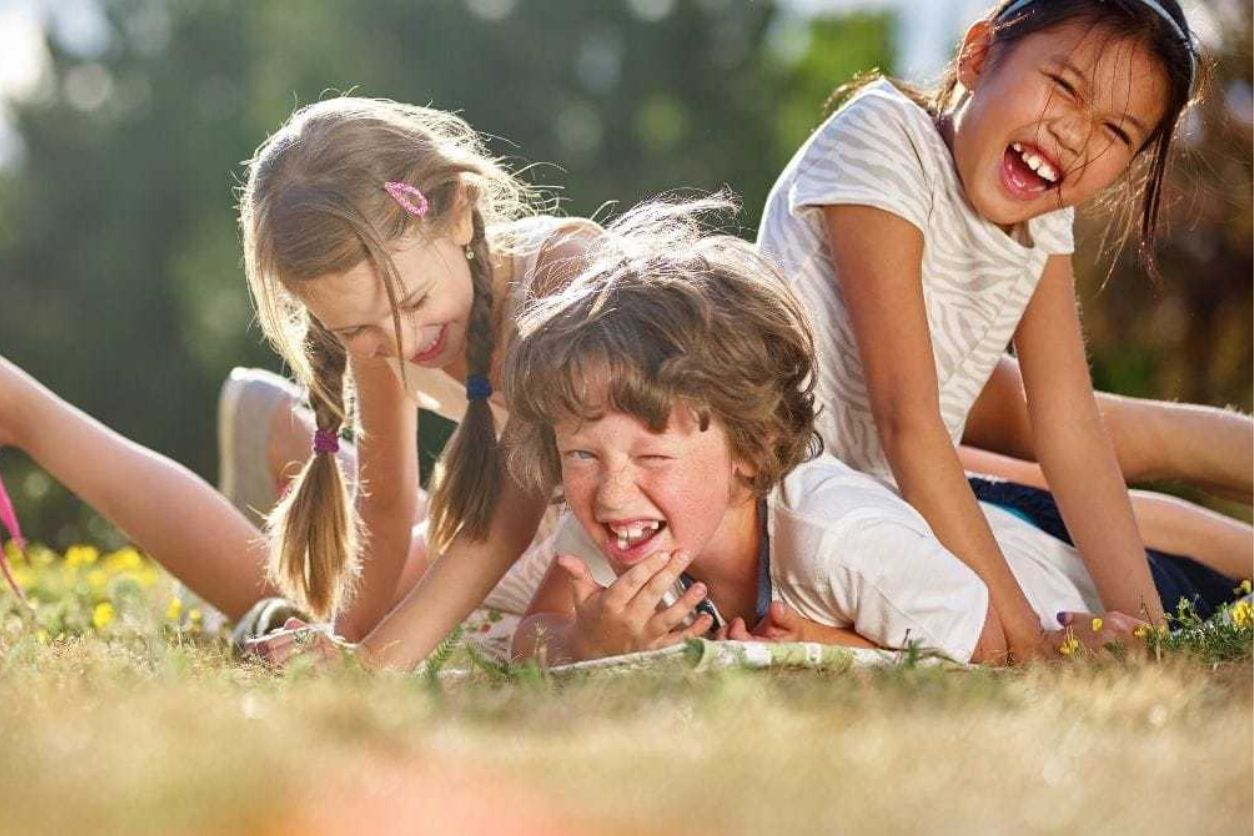
Roughhousing rarely shows up on parenting checklists. I have seen parents who, after watching roughhousing videos on social media, turn down the idea down thinking it’s noisy, physical, and unpredictable. But that physical play, far from being disruptive, plays a crucial role in how children learn to regulate their emotions, interact socially, and build resilience.
“It’s very innate in them,” says Dr. Sheryl Ziegler, parenting expert and author of Mommy Burnout. “So it’s really important that when parents are thinking about all the things they want to do for their kids, that roughhouse play… is truly a part of their learning development.”
It helps shape behavior, encourages healthy risk-taking, and creates a trusted dynamic where children feel safe exploring the edges of their physical and emotional capacity.
What Does the Research Say About Roughhousing?
There’s solid research behind why roughhousing matters. You can think of it as a tool that helps children internalize some of the most critical social skills. According to Po Bronson, co-author of NurtureShock, “roughhousing… is breeding really healthy competitive skills.”
That doesn’t refer to teaching children how to win. It’s about teaching them how to keep their intensity in check. “In competition, you can get pumped up, you can get intense… but there’s a line you don’t cross,” Bronson explains. The ability to recognize that line—and back off before crossing it—is what roughhousing can help develop.
When kids are play-fighting with adults who know how to regulate the interaction, they learn how to escalate play in a way that feels exciting, then downshift when needed. “As the kid is getting intense, the parent can downregulate the situation and cool it off,” Bronson says. Over time, this process becomes internalized, helping kids navigate all kinds of social situations with better control.
How Does Roughhousing Teach Emotional Awareness?
It’s often in the middle of play, when laughter and squeals echo off the walls, that kids learn to pay close attention to others’ emotions. Roughhousing introduces the idea that excitement and safety must coexist.
Dr. Ziegler suggests a simple way to keep play in the right zone: “A great thing that a parent can say… is, ‘Are you still having fun?’” That question acts as a reset. If someone isn’t, the mood has shifted from playful to uncomfortable, and that’s a cue to pause.
These brief check-ins teach children that feelings matter. They learn to tune in, respond, and adjust based on how others feel. It’s a crash course in emotional intelligence, disguised as a game.
When and Where Is Roughhousing Appropriate?
Not all spaces are same when it comes to physical play. “Supervision is important. The environment is important,” Ziegler points out. The family room may be perfect for a quick pillow match, while a public place, like a restaurant or worship service, is clearly not.
Just like any kind of play, roughhousing works best when there are boundaries. “You’re not scratching, you’re not biting, you’re not straight up crunching,” says Ziegler. Structure doesn’t restrict the fun, it supports it. With consistent limits, children learn self-control and respect for others.
These rules extend beyond the moment. Children begin applying the same awareness in peer interactions, managing how far is too far with friends, siblings, and eventually classmates and teammates.
How Does Roughhousing Help Kids Build Real Confidence?
Risk-taking is part of growth. When children leap off furniture or wrestle across the rug, they’re not just testing strength their strength but also their courage. And when adults join in, they offer a secure space for that trial and error.
Ziegler frames it like this: “It’s kind of like why you want kids to crawl before they walk.” Physical risk, managed with care, is an essential developmental stage. Each bounce, roll, and tumble builds not only motor skills but also internal confidence.
These moments help children feel capable, not because they’re told so, but because they experience it in their own bodies. The confidence built during roughhousing lasts far beyond childhood.
How Often Should Roughhousing Happen?
Roughhousing doesn’t require a weekend plan or a large block of time. Short, spontaneous bursts can be just as powerful. Five minutes after dinner or during a break from homework can reset a child’s mood, improve focus, and strengthen connection.
Bronson captures the mystery and meaning of this kind of play perfectly: “We don’t really know why we do it… but it actually [is] really meaningful.” These interactions become small rituals that communicate safety, attention, and presence.
And perhaps most importantly, they become part of a child’s emotional memory—evidence that they were known, challenged, and supported in the same breath.
Who Really Benefits from Roughhousing?
Despite lingering stereotypes, roughhousing is not exclusive to boys. Girls benefit equally from physical play, and they deserve just as much room to explore strength, spontaneity, and trust.
“If you really let kids be kids, they’re pretty rough with each other,” Ziegler notes. The instinct is universal. What matters is giving all children the same permission to engage in this form of learning, regardless of gender.
The goal isn’t to toughen anyone up. It’s to raise children who understand their own power, respect the space of others, and carry a deep sense of confidence into the world around them.
Decades of Combined Expertise
Best Buy Guidebook is a culmination of online publishing lessons learned. From SEO to paid ads, our team has experienced the highest of highs and the lowest of lows. Our goal now is simple: Arm readers with the most information possible.