
What Is Coconut Cult Yogurt—and How Do You Eat It?


If you’ve wandered through the refrigerated aisles of a health food store or spent more than five minutes on wellness TikTok, there’s a good chance you’ve seen it: a small glass jar with a bold label—Coconut Cult. If you think it’s just another dairy-free yogurt, think again. It’s a concentrated, probiotic-rich coconut yogurt that’s gained a steady following for its unique approach to gut health.
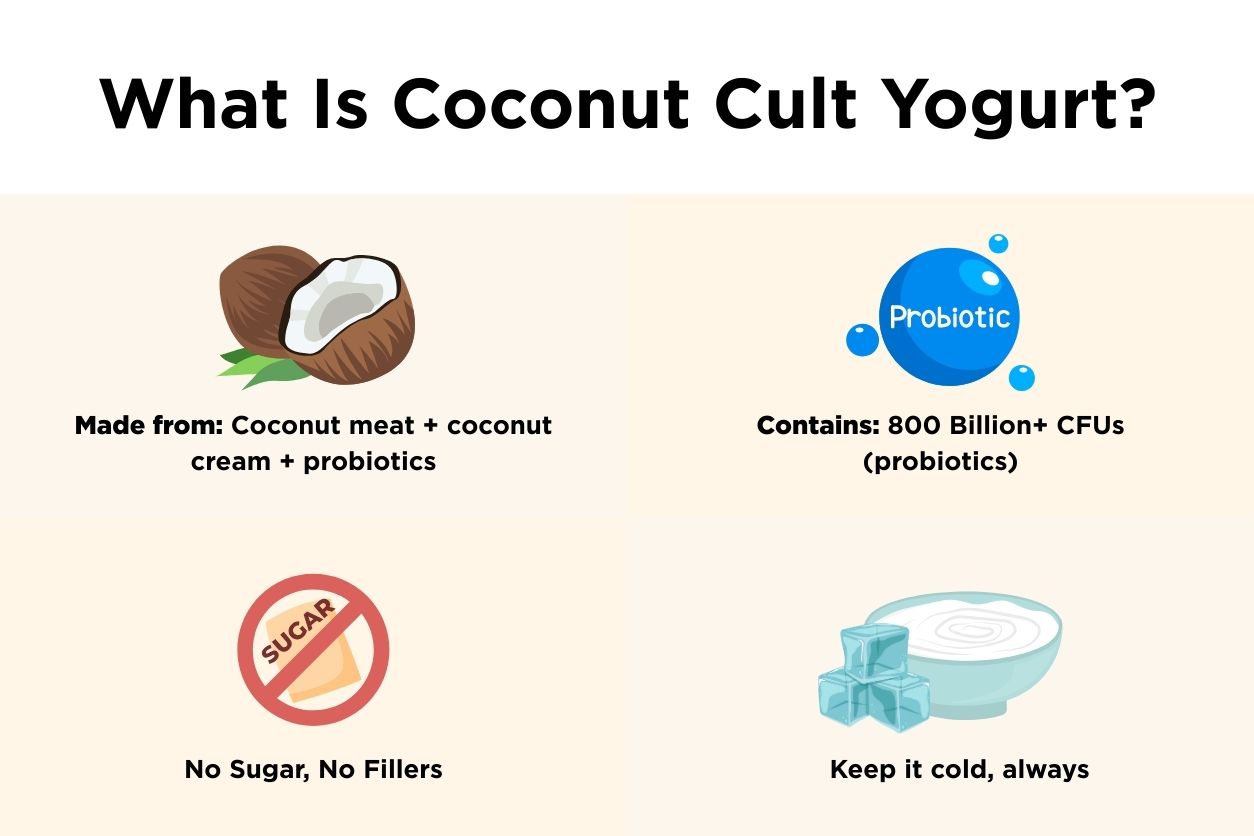
So, what exactly is it? Coconut Cult is a fermented coconut-based yogurt made from raw, organic ingredients and packed with probiotics—up to 800 billion CFUs (colony-forming units) per jar. That’s not a typo. This stuff is strong, and it’s meant to be eaten in tiny amounts, more like a functional food than a morning staple.
What Is Coconut Cult?
Coconut Cult is made from just a few ingredients: raw coconut meat, coconut cream, and a proprietary blend of probiotics. That’s it—no fillers, thickeners, or extras.
Once fermented, it takes on a thick, spreadable texture and a tangy flavor that’s quite different from most plant-based yogurts. Since it’s packed with live bacteria, it needs to stay refrigerated and handled with clean utensils to stay fresh.
Because it’s so concentrated, a little goes a long way. Most people stick to a spoonful or two per day, more like a supplement than a snack.
What Makes It So Different from Other Yogurts?
The short answer is potency. Most store-bought yogurts contain a few billion CFUs of probiotics per serving. Coconut Cult packs in much more—often in the hundreds of billions—and includes over 15 different strains.
These strains are commonly associated with digestive and immune support, and some people even notice improvements in skin health. But like anything probiotic-related, results can vary. That’s why it’s a good idea to start small—just half a spoonful a day is usually enough when you’re new to it.
Another thing to know: there’s no added sugar. The slight sweetness comes naturally from the coconut, but most of it gets used up during fermentation. So the final product ends up being low in sugar, dairy-free, and designed more for function than flavor.
How to Eat Coconut Cult Yogurt
This is not the kind of yogurt you eat by the bowl. Think of it more like a supplement—or a seasoning for your gut. A little goes a long way.
Here are a few simple, non-fussy ways to use it:
- Straight off the spoon: One spoonful in the morning works like a daily probiotic shot.
- In smoothies: Add a tablespoon after blending to avoid killing the live cultures.
- Swirled into oats or chia pudding: Adds a tangy kick and probiotic benefits.
- Spread over fruit: A dollop on top of berries makes for a surprisingly good combo.
And a word of caution: don’t overdo it. Taking too much too quickly can upset your stomach, especially if your gut isn’t used to heavy-hitter probiotics.
Is It Worth the Hype?
That depends on what you’re looking for. If you’re expecting a light, coconutty treat, you might be caught off guard. It’s tangy, thick, and not sweet in the traditional sense. And yes, it’s pricey—often over $25 a jar.
But for those focused on gut health, it makes more sense when viewed as a high-potency probiotic in a food matrix. Many people report better digestion, less bloating, and improved overall balance after using it consistently for a few weeks.
While it’s hard to separate the placebo effect from real results, there’s growing research supporting the benefits of fermented foods on the microbiome. Coconut Cult simply takes that idea and turns up the volume.
Coconut Cult vs. Probiotic Capsules
You might be wondering—why not just stick with probiotic pills? The main difference comes down to how the body absorbs them. When probiotics are part of a whole food like yogurt, especially one with fiber and healthy fats, it may help the bacteria survive the trip through your digestive system a bit better.
Coconut Cult contains well-known strains like L. acidophilus, L. plantarum, and B. bifidum—the same ones you’ll find in many high-quality supplements. The idea is that having them in a food-based format might offer some added benefits. It doesn’t have to be either-or; for some people, it’s a helpful addition alongside capsules rather than a full replacement.
Are There Any Downsides?
There are a couple of things to keep in mind. First, it’s not the easiest product to find. Because it’s raw and needs to stay cold, it’s mostly available in specialty stores or through limited online shipping. And yes, it’s definitely on the pricier side.
The flavor might also surprise you. If you’re used to sweet, dessert-like yogurts, the tangy, almost savory taste of Coconut Cult can take a little adjusting.
Also, since it’s a live fermented food, it might not be the best fit for people with very sensitive digestion or weakened immune systems. Like with any strong probiotic, starting slow and paying attention to how your body reacts is a good idea.
How to Store and Handle It
Keep it cold, always. This yogurt is very much alive, and warmth shortens its lifespan. Store it in the back of your fridge—not the door—and always use a clean spoon to avoid contamination.
Once opened, it stays fresh for about three weeks. Over time, the flavor may deepen, which is normal. But if it smells off or develops visible mold, it’s time to toss it.
Decades of Combined Expertise
Best Buy Guidebook is a culmination of online publishing lessons learned. From SEO to paid ads, our team has experienced the highest of highs and the lowest of lows. Our goal now is simple: Arm readers with the most information possible.