
How Often Should You Wash Your Bed Sheets? Cleaning Experts Have the Answer


Your bed might seem like the cleanest place in your home, but under the surface, it’s a whole different story. Dead skin cells, sweat, body oils, and dust mites pile up fast which can your bed into a hotspot for bacteria and allergens. So, how often should you wash your bed sheets? Cleaning experts say it depends on your lifestyle, habits, and even where you live.
Melissa Maker, a cleaning expert and former cleaning business owner, emphasizes the importance of regular washing. “People believe all sorts of different things in terms of how long they should be waiting between washing their linens,” she says. But when you consider how much time you spend in bed, the reality becomes clear: washing your sheets regularly is essential for hygiene and comfort. Some people might not even realize how quickly their sheets get dirty. If you make your bed first thing in the morning, you might be trapping moisture and odors right in your bedding. That buildup doesn’t just make your bed smell funky—it creates a perfect home for dust mites.
Let’s get into exactly how often you should be washing your sheets and the rest of your bedding to keep things fresh and clean.
Why Washing Your Bed Sheets Matters
Your sheets may look fine, but that doesn’t mean they’re actually clean. Every night, your body sheds dead skin, produces oils, and sweats—sometimes a lot. All of that gets absorbed into your sheets. “Your bed is like a giant sponge—it soaks up everything,” says Maker. And that’s not even the worst part. Dust mites feed on those dead skin cells and leave behind waste that can trigger allergies and respiratory issues. If you wake up feeling congested or sneezy, dirty sheets might be the culprit.
Beyond dust mites, bacteria and fungi thrive in warm, damp environments. If you go to bed without showering, sleep in the nude, or share your bed with pets, your sheets get even dirtier, even faster.
How Often Should You Wash Your Bed Sheets?
Cleaning experts recommend washing your bed sheets at least once a week. “You should be laundering your sheets once a week, minimum,” says Maker. If you sweat a lot, have allergies, or sleep with pets, washing them twice a week is even better. On the other hand, if you barely use your bed or sleep with a top sheet as a barrier, you might be able to stretch it to two weeks—but no longer.
Surprisingly, studies show that the average person waits 24 days—more than three weeks—before washing their sheets. That’s a long time for bacteria, sweat, and dirt to accumulate. If you’ve ever climbed into bed and noticed an unpleasant smell, that’s a clear sign you’ve waited too long. Sticking to a consistent washing schedule keeps your bed fresh and your sleep environment healthier.
What About Pillowcases, Comforters, and Duvets?
While sheets need weekly washing, other bedding items have different cleaning schedules. Pillowcases, for instance, should be washed as often as your sheets, if not more frequently. Your face and hair transfer oils and bacteria directly onto your pillowcase, which can lead to breakouts and irritation. “Your pillowcases get dirty quickly, especially if you use hair products or facial creams,” says Maker. “You might even want to have a second set to swap out mid-week.”
Duvet covers should be washed every two to four weeks, especially if you use a top sheet. If your comforter or duvet doesn’t have a removable cover, washing it can be a bit trickier. Depending on the fabric and size, you might need to take it to a laundromat or dry cleaner. “If your washing machine can’t handle it, don’t force it,” Maker advises. “A laundromat’s industrial machines can do the job better.”
Blankets and quilts, especially those that don’t touch your skin directly, can be washed every one to two months. However, if you have pets that sleep on your bed, washing them more frequently is a good idea. Throw pillows and decorative blankets should also get some attention—vacuuming or lint rolling them weekly and washing them every few months helps keep dust at bay.
What is the Right Way to Wash Your Bed Sheets
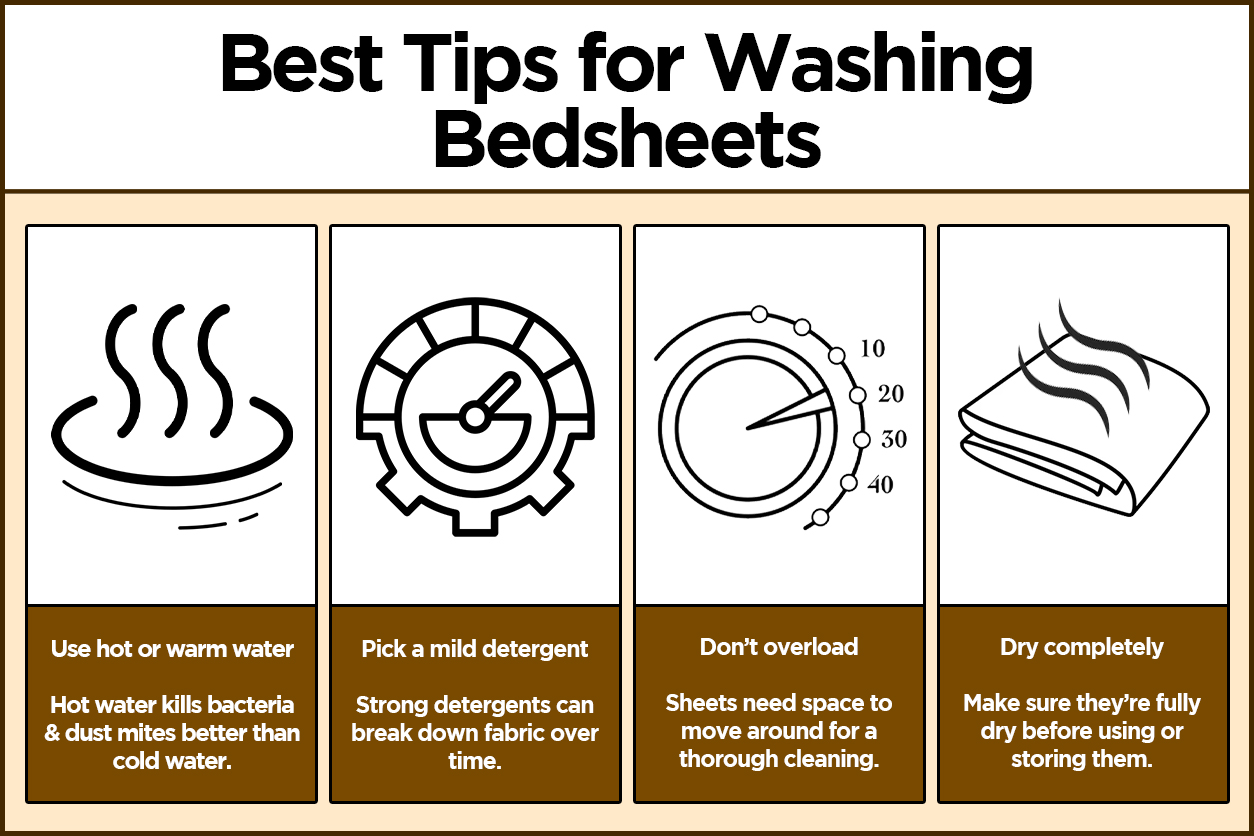
Washing your sheets the right way makes a difference. Here are some expert-approved tips:
- Use hot or warm water – Hot water kills bacteria and dust mites better than cold water.
- Pick a mild detergent – Strong detergents can break down fabric over time.
- Don’t overload the machine – Sheets need space to move around for a thorough cleaning.
- Add an extra rinse cycle – This removes leftover detergent that could cause skin irritation.
- Dry completely – Damp sheets breed mildew. Make sure they’re fully dry before using or storing them.
Maker also recommends vacuuming your mattress and using a mattress protector. “A mattress protector is a game-changer—it keeps your mattress from absorbing all that sweat and dust,” she says. Wash the protector monthly to keep your bed setup clean.
The Impact of Dirty Sheets on Sleep and Health
Sleeping on dirty sheets doesn’t just feel gross—it can actually affect your health. The buildup of sweat, oil, and bacteria can trigger allergies, asthma, and skin issues like acne or eczema. If you wake up with a runny nose or itchy eyes, your bedding could be to blame.
Beyond health concerns, clean sheets improve sleep quality. Studies show people sleep better in fresh, clean environments, and climbing into crisp sheets just feels good. Maker agrees: “There’s nothing better than getting into a bed with fresh sheets. It’s one of those simple things that makes a big difference in how you sleep.”
Decades of Combined Expertise
Best Buy Guidebook is a culmination of online publishing lessons learned. From SEO to paid ads, our team has experienced the highest of highs and the lowest of lows. Our goal now is simple: Arm readers with the most information possible.