
Sleeping with Allergies Is Tough—Here’s How to Rest Peacefully

Trying to get a good night’s sleep with seasonal allergies can feel nearly impossible. I’ve experienced those nights firsthand—the congestion, sneezing, itchy eyes—all keeping me awake despite my best efforts. Seasonal allergies typically flare up from March to June, making it especially challenging to rest comfortably. Amanda Jewson, founder of Baby’s Best Sleep, explains why it’s so difficult: “When your body is producing a histamine response, it actually makes you more wakeful. You feel more alert and energized, and that can really impact your sleep.” On top of feeling uncomfortable, this heightened state of alertness means falling asleep can take much longer than usual.
Can Medications Help You Sleep Better During Seasonal Allergies?
While medication offers some relief, it’s not a standalone solution. Antihistamines might help initially, but they often leave you feeling groggy or disrupt sleep patterns. The key to sleeping better during allergy season lies in practical environmental and lifestyle adjustments. Here are simple yet effective tips to help you reclaim restful nights—even when allergies hit their peak.
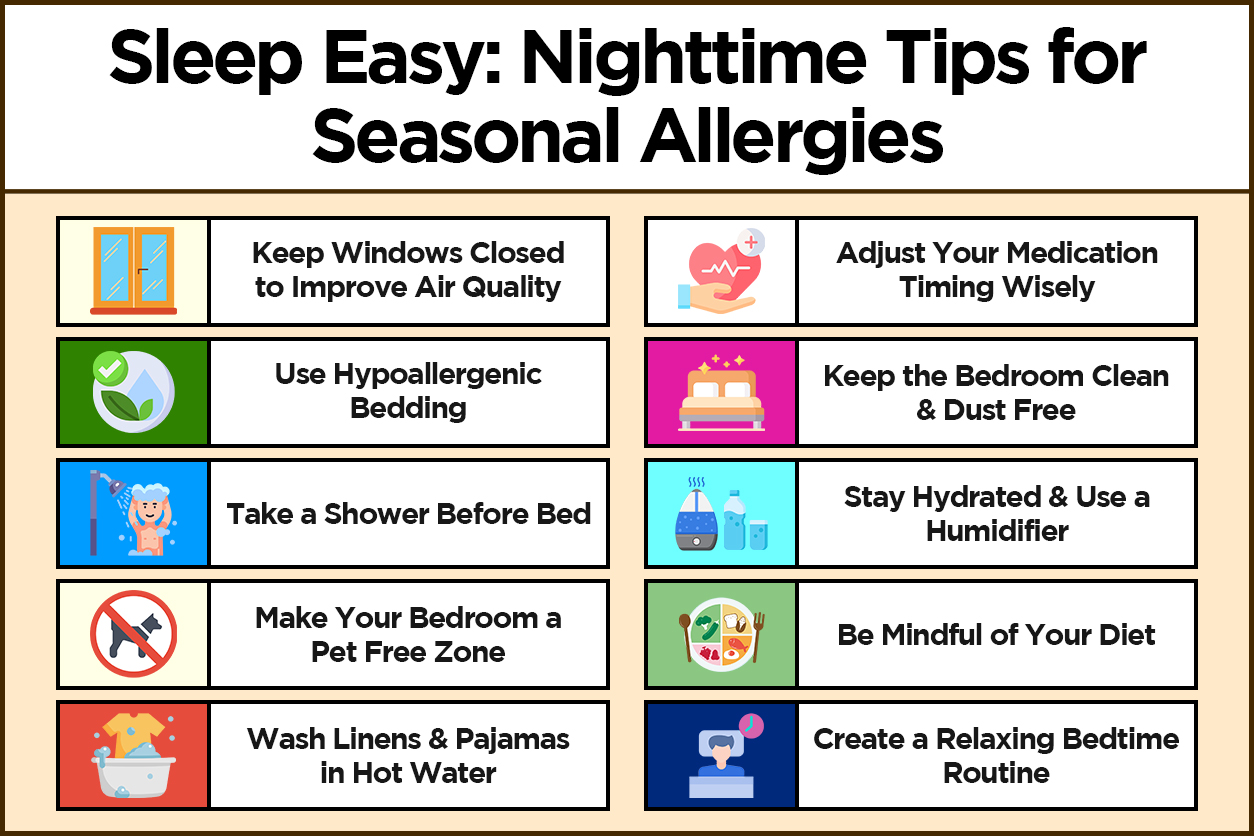
1. Keep Windows Closed to Improve Air Quality
Fresh air is tempting, especially when spring arrives, but open windows invite allergens right into your home. Amanda Jewson strongly advises, against it, saying, “Those airborne allergens come right in your window, especially if you have those outdoor allergies.” Pollen, dust, and other irritants enter the home and settle into bedding and furniture, making symptoms more persistent.
Instead, rely on air conditioning and invest in a HEPA filter to trap allergens before they reach your airways. Regularly replacing HVAC filters ensures better indoor air quality, further reducing the number of allergens floating around your bedroom.
2. Use Hypoallergenic Bedding
One of the easiest improvements I’ve made to my sleep environment is switching to hypoallergenic bedding. Mattresses, pillows, and comforters often become hotspots for dust mites and allergens, leading to restless nights. Jewson suggests using hypoallergenic pillow and mattress covers: “If you do have dust mite allergies, investing in a latex pillow makes all the difference. It makes it less hospitable to dust mites.”
Washing your sheets and pillowcases weekly in hot water also helps eliminate allergens. If new bedding isn’t feasible, frequent laundry cycles still make a noticeable difference.
3. Take a Shower Before Bed
If you spend time outdoors, allergens like pollen and dust cling to your skin and hair. Instead of carrying those irritants into bed, a quick rinse removes them. “I always suggest taking a shower or bath before bed. Not only does it lower your body temperature, but you’re also washing off pollen and pet dander,” Jewson advises.
For extra relief, consider a saline nasal rinse before bed to clear your nasal passages of lingering allergens, allowing for easier breathing.
4. Make Your Bedroom a Pet-Free Zone
As comforting as it is to sleep next to our pets, they often bring unwanted allergens like pollen and dander into bed. Even if you’re not allergic to your pet, your pet can still carry pollen and dander from outdoors into your sleeping space.
Establishing a pet-free zone in the bedroom can significantly decrease allergen exposure. Regular vacuuming and dusting further reduces irritants, creating a more comfortable sleeping environment.
5. Wash Linens and Pajamas in Hot Water
Clothing and bedding trap allergens, which can trigger symptoms throughout the night. Washing linens and pajamas weekly in hot water kills dust mites and removes pollen buildup. Pay special attention to pillowcases, as they collect allergens from your face and hair.
Consider drying clothes indoors rather than on a clothesline to prevent pollen from settling on freshly washed fabrics.
6. Adjust Your Medication Timing Wisely
Antihistamines help reduce allergy symptoms but can interfere with sleep if taken at the wrong time. Some medications cause drowsiness, while others keep you awake. Jewson points out, “We have to be thoughtful about when we use them. Some can make us really drowsy, but using anything to make you drowsy just to fall asleep can also be problematic.”
Consult your doctor or pharmacist to determine the best time to take allergy medications. Non-drowsy antihistamines in the morning and sedating ones at night may help balance symptom relief and restfulness.
7. Keep the Bedroom Clean and Dust-Free
Allergens settle on surfaces, and if your room isn’t cleaned regularly, symptoms can worsen. Dusting, vacuuming, and wiping down surfaces weekly help control allergen buildup. “Think about the cleanliness of your room. Many people skip cleaning their bedrooms because guests don’t see them, but it makes a huge difference,” Jewson says.
Use a vacuum with a HEPA filter to trap small particles and avoid using scented cleaning products, which can further irritate allergies.
8. Stay Hydrated and Use a Humidifier
Dehydration makes mucus thicker, worsening nasal congestion. Drinking plenty of water throughout the day helps thin mucus and makes it easier to breathe at night. Additionally, using a humidifier can prevent dry air from irritating nasal passages.
However, too much humidity can encourage dust mites and mold growth, so keep levels between 30-50% for the best results.
9. Be Mindful of Your Diet
Certain foods can exacerbate allergy symptoms. Dairy products, for example, can increase mucus production, making congestion worse. On the other hand, foods rich in vitamin C and anti-inflammatory properties may help support the immune system and reduce symptoms.
Try incorporating foods like citrus fruits, ginger, and honey into your diet to help manage inflammation and irritation.
10. Create a Relaxing Bedtime Routine
A structured bedtime routine signals the body that it’s time to wind down. “I love a good bedtime routine,” Jewson says. “Incorporating small changes, like a cup of soothing tea, can help with congestion and relaxation.”
Chamomile or peppermint tea before bed can help open airways, while avoiding caffeine and alcohol reduces inflammation and nighttime disturbances.
Decades of Combined Expertise
Best Buy Guidebook is a culmination of online publishing lessons learned. From SEO to paid ads, our team has experienced the highest of highs and the lowest of lows. Our goal now is simple: Arm readers with the most information possible.