
How to Clean Stainless Steel Appliances Without Leaving Streaks

Have you ever cleaned your stainless steel appliances only to be left with streaks, smudges, or a dull finish? If yes, this is a story many of us share. Knowing how to clean stainless steel appliances properly can make all the difference in keeping them looking spotless. Stainless steel is a durable, sleek material, but it requires a specific cleaning approach to maintain its shine. Using the wrong products or techniques can result in buildup, scratches, or stubborn residue that won’t go away.
Brandon, a professional cleaner and owner of Let’s Clean That Up, puts it simply: “The key to cleaning stainless steel is understanding its grain and using the right products. If you clean against the grain or use something too harsh, you can end up with streaks or even scratches.” That’s why following a proper cleaning routine is essential.
In this guide, I’ll walk you through the best way to clean stainless steel appliances while avoiding streaks, plus a few common mistakes to steer clear of.
Why Does the Grain Direction Matter?
Just like wood, stainless steel has a natural grain pattern. Sometimes it runs vertically, while in other cases, it’s horizontal. Before you even grab a cleaning cloth, take a moment to inspect your appliance and figure out which way the grain runs. “If you wipe against the grain, you’re not just leaving streaks,” Brandon explains. “You’re actually pushing dirt and grease into the tiny grooves, which makes it harder to clean over time.”
The best practice is always to clean in the direction of the grain. This simple step prevents unnecessary buildup and ensures a streak-free finish. If you’re struggling to see the grain, try looking at the appliance from an angle with good lighting—it’s usually easier to spot that way.
What’s the Best Cleaner for Stainless Steel?
When it comes to cleaning stainless steel, you don’t need a fancy, store-bought product. In fact, Brandon swears by a simple DIY solution: “A spray bottle with water and a few drops of dish soap works wonders. The degreasing properties in dish soap cut through fingerprints and smudges, and it’s gentle enough not to damage the steel.”
If you prefer a commercial cleaner, opt for something that’s specifically designed for stainless steel. Brandon recommends Bar Keepers Friend or Sprayway Stainless Steel Cleaner. But be cautious—many store-bought cleaners contain oils. While a small amount helps create a polished look, using too much can leave a sticky residue that attracts more dust and dirt over time.
Avoid harsh chemicals like bleach, which can discolor stainless steel. Also, steer clear of abrasive scrubbers like steel wool or rough scouring pads. “Those green and yellow scrubbers you use for dishes? Don’t even think about using them on stainless steel,” warns Brandon. “They’ll leave visible scratches that are impossible to buff out.”
How to Clean Stainless Steel Appliances
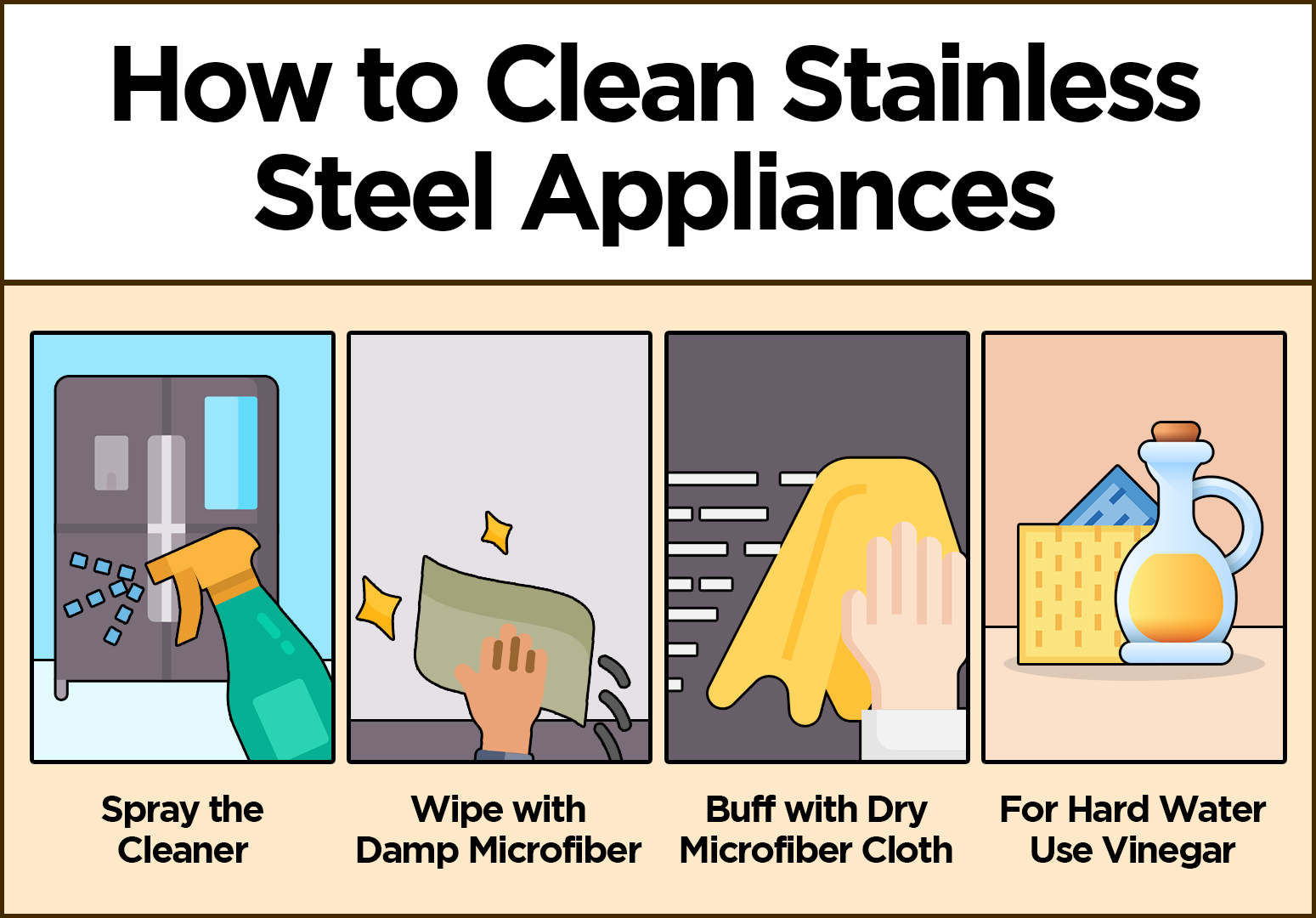
Spray the Cleaner
Lightly mist the surface with your cleaning solution. If you’re using a spray bottle, adjust the nozzle to a fine mist rather than a heavy stream. “You don’t want excess liquid running down the surface because that can leave water spots,” Brandon explains.
Wipe with a Damp Microfiber Cloth
Take a damp microfiber towel and gently wipe the surface in the direction of the grain. Microfiber is essential because it traps dirt and doesn’t leave behind lint or scratches.
Buff with a Dry Microfiber Cloth
This is where most people go wrong. “The secret to a streak-free finish is drying the surface completely with a clean, dry microfiber towel,” Brandon says. “This removes any leftover moisture and polishes the surface at the same time.”
For Tough Spots (Like Hard Water or Rust)
If you have hard water buildup or rust, white vinegar is a great solution. Simply apply a small amount with a soft cloth and gently scrub the affected area. For tougher spots, Bar Keepers Friend Soft Cleanser works well. Just make sure to test it on an inconspicuous area first.

What Are the Most Common Mistakes People Make?
Even with the right tools and cleaners, there are a few mistakes that can make stainless steel look worse instead of better. Here are some things to watch out for:
- If you let water or cleaner sit on stainless steel, it can leave streaks or even cause water stains. Always finish with a dry microfiber cloth.
- While some stainless steel polishes use oil to add shine, too much can create a sticky buildup that attracts dirt.
- Avoid steel wool, rough sponges, or anything that can scratch the surface. Even paper towels can sometimes leave tiny scratches.
- Always wipe in the direction of the grain to prevent streaks and buildup.
- Stay away from bleach, ammonia, or other harsh chemicals that can damage the finish.
Brandon points out, “I’ve seen people use olive oil or baby oil to ‘polish’ their appliances. Sure, it makes them shiny at first, but it leaves behind a residue that gets sticky over time. It’s not worth it.”
How Do You Keep Stainless Steel Looking Clean?
Once your stainless steel appliances are clean, keeping them looking that way is all about maintenance. Here are a few simple habits that can help:
- A quick wipe with a dry microfiber cloth every few days prevents dust and fingerprints from building up.
- If you have hard water, consider using a filtered water spray to avoid mineral deposits.
- Instead of doing a full clean every time you see a smudge, just grab a dry microfiber cloth and buff it out.
- If you like using stainless steel polish, use it occasionally and always follow up with a dry wipe to remove excess residue.
With the right routine, your stainless steel appliances will stay spotless and streak-free. “It’s all about consistency,” Brandon says. “A little maintenance goes a long way in keeping your appliances looking brand new.”
Decades of Combined Expertise
Best Buy Guidebook is a culmination of online publishing lessons learned. From SEO to paid ads, our team has experienced the highest of highs and the lowest of lows. Our goal now is simple: Arm readers with the most information possible.