Best Buy Guidebook is a culmination of online publishing lessons learned. From SEO to paid ads, our team has experienced the highest of highs and the lowest of lows. Our goal now is simple: Arm readers with the most information possible.



If you have a set of tools from one brand, you don’t want to be locked into their expensive batteries only
Imagine drilling 100 holes for shelving and your new battery dies at hole 87. Now you’re stuck—not for seconds, but for 45–60 minutes while it crawls back to a workable charge. But what if you spent the money differently? One branded battery = $129. And a third-party two-pack = $50. With the branded battery, you’re stuck waiting for it to recharge. With a third-party two-pack, the wait time is 0 minutes. Pull one out, click the other in, and hole 88 happens instantly.
If you’ve got a mental checklist for the perfect battery, the Junwood power tool batteries set (for Ryobi) will tick every box—and maybe a few you didn’t think of. Our team voted it best overall after reviewing five popular batteries. Of course, not everyone runs on Ryobi tools—you’ll also find top picks for DeWalt, Black+Decker, and Craftsman batteries below.
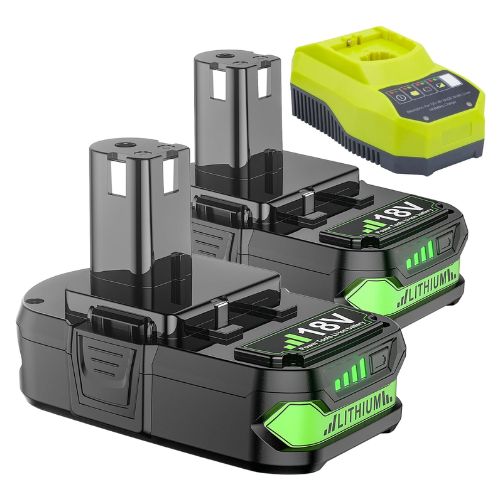
An official Ryobi 4Ah battery costs $129. Junwood asks $51.99 for two batteries and a charger. That’s 60% less money, 200% more batteries, and 1 charger thrown in. Call it what you want—I call it a steal.
To be clear, Junwood is a third-party replacement (sometimes called a generic battery). It’s designed to look and function like the original Ryobi batteries and is compatible with Ryobi tools and chargers. With the Junwood power tool batteries set, you get two 3.8Ah batteries plus a charger. So realistically, if you pop in a fresh 3.8Ah battery and run the drill continuously, you’ll get about 30–45 minutes of runtime. And of course the drill time stretches noticeably longer when you have two batteries—especially on tools that eat power fast, like circular saws or blowers. That said, the batteries fit almost every Ryobi tool (P102 through P191), which means one purchase covers a whole garage of drills, trimmers, and saws. Feature-wise, the LED indicator tells you how much charge is left, sparing you the frustration of a tool dying mid-cut. And because the batteries are built with protection against overcharging, overheating, and short circuits, they don’t just last through heavy use—they last longer overall. The value is the clincher: two batteries plus a charger for less than the price of one Ryobi battery. So you can choose: the Junwood set at $51.99 for two batteries, or the official Ryobi battery at about $129 for one.

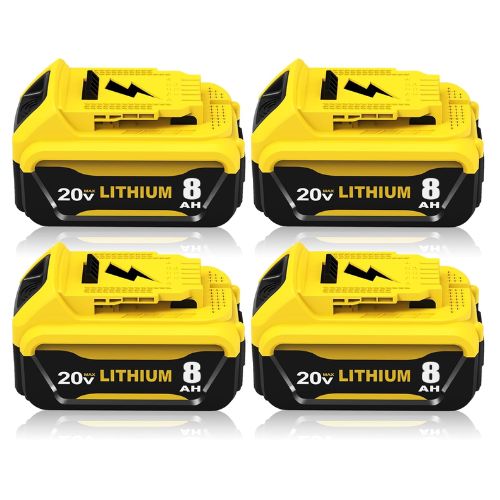
The Eagglew power tool batteries wear the DeWalt colors—yellow body, black trim—but it’s not stamped with DeWalt’s name. It’s a compatible replacement (like the best overall), designed to fit and power DeWalt tools. Where it differs is in price and quantity: you get four batteries for the cost of a single DeWalt battery. That’s a massive gap in value.
Beyond that, not only does Eagglew pack more capacity per unit at 8.0Ah compared to DeWalt’s 5Ah, it also promises modern protections: overcharge resistance and constant voltage circuits. Still, the genuine DeWalt battery, ranked fifth on this list, keeps its edge in one critical way: trust. Years of proven reliability and brand-backed warranty stand behind it. For someone with DeWalt tools, the choice becomes a test of priorities: more batteries at a lower price, or one battery backed by DeWalt’s warranty and proven track record.

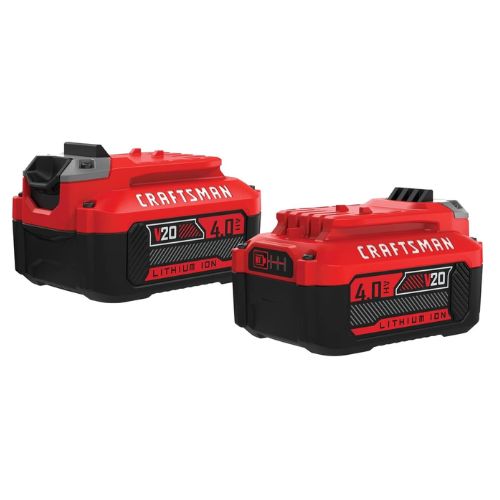
An official battery may cost 2× more, but it’s the one the brand designed, tested, and guaranteed for your tool—down to the last circuit. If budget isn’t a consideration, that extra $60–$80 is really buying peace of mind—something no third party can promise in the same way. That said, here we have the official Craftsman power tool batteries—made specifically for Craftsman tools. Unlike the best overall or runner-up, which work as third-party replacements for Ryobi and DeWalt, this one can’t be swapped across brands. If your tools are Craftsman, this is the battery you need.
Spec-wise, each battery is 4.0Ah, putting it right between Eagglew’s 8.0Ah replacements and Junwood’s 3.8Ah batteries. In terms of runtime, that means stronger endurance than Junwood but not as much as Eagglew. Price-wise, the set is $149 for two batteries, or about $92 if you only need one, with a third option as a two-battery-and-charger bundle for $160.13.
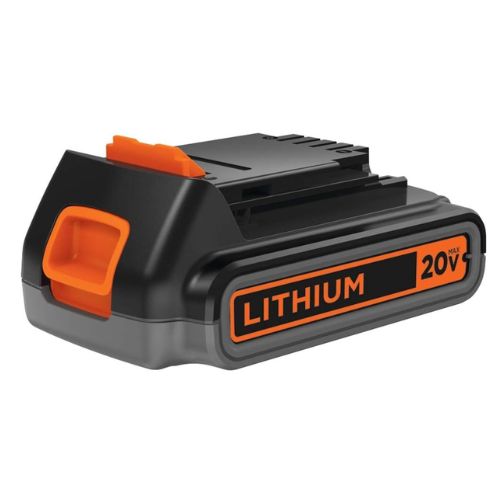
Do you own Black+Decker tools? Then this is the battery you need—the official 2Ah Black+Decker power tool battery. You can use the 2Ah for lighter tasks—like drilling a few holes or tightening screws—where a smaller, faster-charging battery keeps the tool easy to handle. Or you can go with the 4Ah battery for heavier jobs—like mowing, trimming, or running a circular saw—where longer runtime outweighs the extra weight.
Price-wise, it runs at $52.97 for the 2Ah or $84.99 for the 4Ah. Compared with Junwood’s $51.99 set of two, this is more expensive for less power—but if you already own Black+Decker tools, this is the compatible choice that keeps your system running.
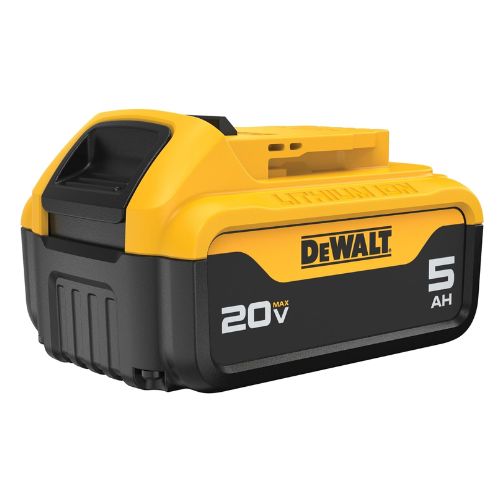
I’m a fan of DeWalt (their vacuum is in my garage right now), but I also weigh cost against performance. For that reason, their official DeWalt power tool battery sits at number five. If you don’t mind paying more, it could easily take the place of the third-party battery I’ve listed higher. Price-wise, it’s $69 and ahem (throat clear)—look at that 4.7-star rating from nearly 20,000 people. It’s one of the most widely trusted batteries on the market.
In terms of performance, the 5Ah capacity gives steady runtime for drilling, cutting, or grinding, and the built-in LED indicator keeps you aware of how much power you have left. Compared to the Eagglew 8.0Ah packs, which came in second place, the difference is less about compatibility—both work with DeWalt tools—and more about performance and value. Eagglew offers more amp hours and sells as a four-pack for a lower cost per battery. DeWalt, on the other hand, has a reputation for long-term reliability. If you already own DeWalt tools, you can use either. The choice comes down to whether you’d rather maximize savings with Eagglew or stick with the official DeWalt battery backed by thousands of satisfied customers.
Unfortunately, you can’t just pick any battery. Power tools are usually locked into their own systems. A Junwood battery, for example, is designed for Ryobi ONE+ tools. If you own DeWalt, you’ll need something like the Eagglew or DeWalt’s own DCB205. Therefore, always check the brand and model numbers on your tool before buying.
Ah ratings (amp hours) tell you how long the battery will last per charge. The Junwood comes in at 3.8Ah, which already outperforms smaller 1.5Ah or 2.0Ah batteries. The higher the number, the longer you can keep working before swapping or charging.
Tools and batteries have to match in voltage. Ryobi runs on 18V, while DeWalt, Black+Decker, and Craftsman run on 20V systems. You need to stick with the right one, or you’ll waste money on a battery that’s not compatible.
One official battery can sometimes cost as much as a whole set of third-party ones. Junwood proves this: two batteries plus a charger for $51.99. Compare that to a single Black+Decker battery at $52.97. The math matters.
One battery may be fine for light users, but pros benefit from multi-packs. Eagglew ships four at once. That means you can run one tool all day while charging the rest.
Thousands of other buyers have already tested these batteries for you. The DeWalt DCB205 has 19,000+ reviews and holds a 4.7-star average. That’s a sign of reliability you can trust, even if you pay a bit more.
Some people stick to official batteries for peace of mind. Others look at the numbers and go third-party for savings.
| Name | Brand | Type | Capacity (Ah) | Pack Size | Price (USD) | Compatibility | Position |
|---|---|---|---|---|---|---|---|
| Junwood 3.8Ah (Ryobi Compatible) | Junwood | Third-party | 3.8 | 2 + Charger | $51.99 | Ryobi ONE+ Tools | Best Overall |
| Eagglew 8.0Ah (DeWalt Compatible) | Eagglew | Third-party | 8.0 | 4 | $81.09 | DeWalt 20V MAX Tools | Runner-up |
| Craftsman 4.0Ah | Craftsman | Official | 4.0 | 2 | $149.00 | Craftsman V20 Tools | 3rd |
| Black+Decker 2.0Ah | Black+Decker | Official | 2.0 | 1 | $52.97 | B+D 20V MAX Tools | 4th |
| DeWalt 5.0Ah | DeWalt | Official | 5.0 | 1 | $69.00 | DeWalt 20V MAX Tools | 5th |
Because Junwood isn’t the official brand. It’s a third-party manufacturer making compatible replacements, so you’re not paying for the Ryobi label, warranty, or long track record. That’s why they can sell two batteries plus a charger for around $51.99, while one Ryobi 20V battery alone is $129.
The Eagglew batteries are rated at 8Ah, which looks a lot bigger than DeWalt’s 5Ah on paper. In practice, third-party batteries sometimes fall a little short of their listed capacity. That said, you’re still getting a lot of runtime, and having four of them means you won’t run out of power anytime soon.
It depends on how you work. A single high-capacity battery (like 8Ah) gives you long runtime, but it’s heavier and takes longer to recharge. Two smaller batteries (like 3.8Ah Junwoods) are lighter, and while each one runs out sooner, you can keep working by swapping to the backup while the first recharges. Many people prefer two smaller batteries for a continuous workflow.
Usually, no. Third-party chargers often work fine, but they’re not always optimized for charging speed the way the official ones are. DeWalt’s and Craftsman’s chargers are built for faster, balanced charging that extends battery life.
Yes, it will. More capacity means more cells inside the battery, and that adds weight. For short jobs, you probably won’t notice. But if you’re holding a drill overhead for a while or swinging a trimmer back and forth, an 8Ah battery can feel bulky compared to a lighter 2Ah or 4Ah battery. It’s the trade-off for runtime.
Often, yes. Lower-priced third-party batteries don’t always use the same quality cells or protective circuits as the official batteries. That can mean they wear out quicker—fewer charging cycles before the runtime starts dropping off. With brand-name batteries, you’re paying partly for consistency and lifespan.
Sandblasters and electric screwdrivers can run on batteries, but not the same ones. Sandblasters usually need higher-voltage batteries (like 18V) for enough power, while electric screwdrivers run on smaller, lower-voltage packs. The shapes and connectors differ, so you can’t swap your DeWalt or third-party batteries directly—each tool needs its designed battery.
Best Buy Guidebook is a culmination of online publishing lessons learned. From SEO to paid ads, our team has experienced the highest of highs and the lowest of lows. Our goal now is simple: Arm readers with the most information possible.