
How Does a Robot Vacuum Work?

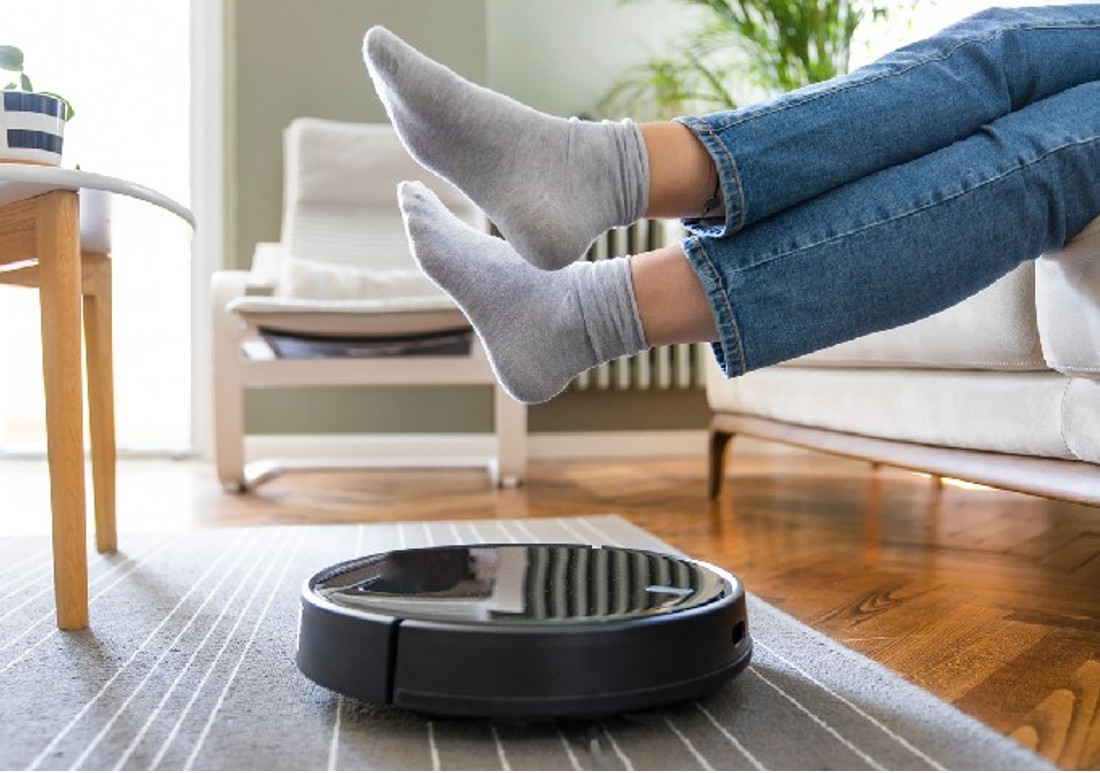
When it comes to cleaning your home, vacuuming might be one of the most time-consuming tasks. Thankfully, there are many robot vacuums to make your life better as they can do the dirty work for you. They’re one of the finest upgrades you can make to a smart home, but some demand more upkeep than others. There is a lot of information out there concerning robot vacuum cleaners, and we’ve broken it down for you.
How Does a Robot Vacuum Operate?
Most robot vacuums use a combination of rotating and rolling brushes. The vacuum system sucks waste and dirt into a trash container as the spinning and rolling brushes work together to pull material inwards.
There is a built-in, removable compartment in robot vacuums to store everything that it collects during cleaning. Once the compartment is filled, you have to empty it manually to keep the vacuum in working condition. You will find auto-emptying docking stations in some versions where you just need to empty the dock and not the whole vacuum. These are a bit pricey, but the convenience is worth the price.
There are certain vacuums that also have mopping attachments. These are more labor-intensive, necessitating frequent water refill and waste removal, as well as the replacement of the attachment. You can conveniently switch between mopping and vacuuming to clean different surfaces on the go.
Suction power and technology are two major factors that differ among models. The suction power of robot vacuums is the same as that of a standard vacuum cleaner. A motor that spins at high speed draws out the air from under the vacuum. After that, the air travels through a filter and exits the machine by a side or rear vent.
Manual cleaning modes are available on most robot vacuums, allowing you to regulate the suction force from low to high for different floor types and conditions, such as spot cleaning. Auto-adjusting vacuum power is a feature of more modern models, and it improves suction on carpets and other extremely filthy surfaces.
Most robot vacuums have a rotating side brush on the front edge which is the initial point of contact with dirt. The vacuum’s side brushes sweep debris inward, allowing it to be sucked up by the machine. These are especially helpful for vacuums that are round in design.
Brush rollers rotate counter-clockwise to scoop up debris and deposit it in a trash collector housed within the machine. It is possible to get these brushes in either a bristle or rubber-blade design.
Sensors in Robot Vacuums
Almost all robot vacuums feature sensors that prevent them from damaging themselves or causing damage to your property. These sensors include:
Cliff Sensors
These sensors use infrared light to check if a “cliff” like a staircase or any other obstacle is approaching or not. For this, the sensor emits infrared light that bounces off objects to send the signals to the vacuum’s receiver, and the receiver commands the vacuum to change its direction.
Object Sensors
On the sides of the vacuum are “object sensors” that work much like the mechanical sensors in a vehicle, similar to the ones in airbags. When the vacuum bumps into something, the object sensors command it to stay back, move around, and change direction.
Dirt Sensors
What would be the use of a vacuum cleaner if it doesn’t suck dirt? The advanced technology in modern robot vacuums senses dirt to suck it up efficiently. The sensors are usually located beside the agitator brush on the bottom. The acoustic sensor vibrates a lot when it gets in touch with a pile of dirt, and then the suction increases to clean the surface efficiently.
Wrapping Up!
Vacuums often work on sensors to detect the dirt, objects, blocks, and walls to clean the surface. If you are tired of spending hours cleaning your home, robot vacuums will be your best companion. Some models even allow you to control them through mobile apps, making the cleaning process a breeze.
Decades of Combined Expertise
Best Buy Guidebook is a culmination of online publishing lessons learned. From SEO to paid ads, our team has experienced the highest of highs and the lowest of lows. Our goal now is simple: Arm readers with the most information possible.