
Deck vs. Patio: Which is the Better Home Investment?

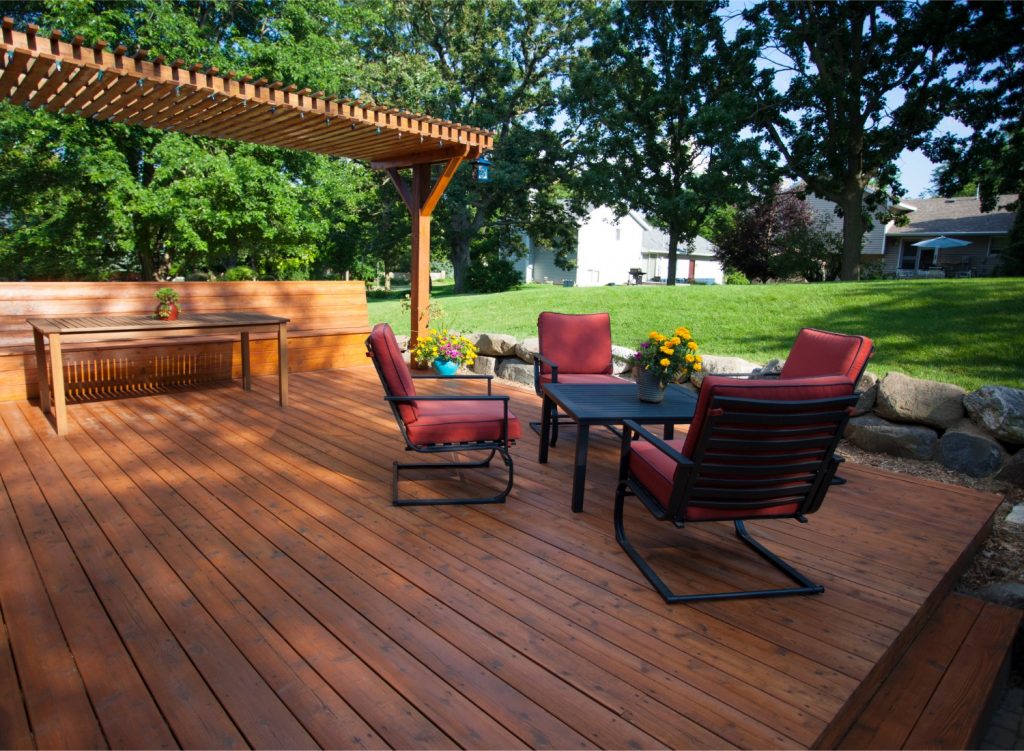
Building a deck or patio can not only enhance your entertaining and leisure activities, but can also elevate the aesthetic and value of your home, but how do you decide between the two? In this article, we’ll dive deep into a deck vs. patio comparison to help you make the best investment for your home.
Both options offer unique advantages and can greatly enhance your outdoor living experience. Whether you’re looking to host lively gatherings or create a tranquil oasis for relaxation, exploring the pros and cons of each option can lead you to make the right choice for your needs.
Defining Decks and Patios
What is a deck?
A deck is an outdoor platform typically made of wood or composite material that’s attached to the back of a house. It’s elevated from the ground and provides a space for outdoor activities such as dining, entertaining, and relaxation. Decks can vary in size, shape, and design and homeowners can easily customize them based on their preferences and needs.
What is a patio?
A patio is an outdoor space constructed at ground level and is usually made of concrete, brick, stone, or pavers. Unlike decks, patios do not have an elevated platform and are directly connected to the ground. Patios are versatile and can serve various purposes, such as dining, lounging, and hosting outdoor events. They are also easy to customize to match the homeowner’s style and preferences.
Factors to Consider When Choosing
Purpose and function
When deciding between a deck and a patio, it’s important to consider the purpose and function of the outdoor space. If you envision yourself hosting large gatherings or dining outdoors frequently, a deck might be the better option as it provides an elevated and spacious area for these activities. On the other hand, if you prefer a more intimate and cozy setting for relaxation or smaller gatherings, a patio may be the ideal choice.
Location and climate
You should also consider your area’s location and climate when choosing between a deck and a patio. A deck can provide a level surface for outdoor activities if your home has uneven terrain or a sloped backyard. Additionally, decks perform well in areas with milder climates with less risk of damage from freezing temperatures or excessive moisture. Conversely, if you live in a region with extreme weather conditions such as heavy rainfall or frequent freeze-thaw cycles, a patio may be more suitable as it is less prone to damage.
Home’s architectural style
Another factor to consider is the architectural style of your home. Both decks and patios can complement the existing aesthetics of your house, but certain styles may lend themselves better to one option over the other. For example, a sleek and minimalist patio may align better with the overall design if you have a contemporary or modern-style home. Conversely, a traditional or rustic-style home might benefit from adding a wooden deck to create a harmonious and classic look.
Breaking Down the Costs
Initial installation costs
The cost of installing a deck or a patio can vary depending on the materials used, size, and design complexity. Generally, decks tend to be more expensive to install than patios due to the additional labor and materials required for the elevated structure. A deck can range from $10 to $35 per square foot, with the average cost falling around $30 per square foot. On the other hand, patios are typically less expensive, with an average cost ranging from $5 to $15 per square foot.
Maintenance costs
Both decks and patios require regular maintenance to ensure their longevity and appearance. Decks, which get exposed to the elements and elevated from the ground, may require more maintenance than patios. They often need annual inspections, cleaning, and sealing to protect against moisture damage, rot, and insect infestations. Additionally, wooden decks may require periodic staining or painting. Conversely, patios generally have lower maintenance requirements, with occasional cleaning and sealing being the primary tasks.
Potential repair costs
Over time, both decks and patios may require repairs due to wear and tear or damage. Decks are more susceptible to rot, splintering, and loose boards, which may require repairs or replacements. The cost of deck repairs can vary depending on the extent of the damage and the materials used. While generally more durable, patios can also experience cracks or uneven settling, which may require repairs. The cost of patio repairs will depend on the materials used and the complexity of the repair work.
Evaluating Durability
Lifespan of decks
The lifespan of a deck can vary depending on factors such as the type of materials used, maintenance practices, and exposure to the elements. Generally, a well-maintained wooden deck can last 10 to 30 years, while composite decks can last 25 to 30 years or more. Proper maintenance, including regular cleaning, sealing, and repairs, can significantly extend the lifespan of a deck.
Lifespan of patios
Patios, especially those made with concrete or stone, are well-known for their durability and longevity. A properly installed and maintained patio can last for several decades. Concrete patios, in particular, have a long lifespan and can withstand harsh weather conditions without significant damage. Regular cleaning and sealing can help maintain the appearance and integrity of a patio.
Exploring Design Opportunities
Design flexibility of decks
Decks offer a higher level of design flexibility compared to patios. Their construction can take the form of various shapes, sizes, and levels to adapt to the terrain and meet the homeowner’s aesthetic preferences and functional needs. With decks, you can incorporate features such as built-in seating, pergolas, or even a tabletop fire pit. The ability to elevate the outdoor space also provides an opportunity to create different zones or areas for different activities.
Design flexibility of patios
While patios may not offer the same level of design flexibility as decks, they still provide ample opportunities for customization. Patio designs come in different shapes and sizes, and various materials can achieve different aesthetics. Additionally, homeowners can enhance their patios with outdoor kitchens, fire pits, or seating areas to create a cohesive and functional outdoor living space.
Customization options
Both decks and patios are customizable and can reflect the homeowner’s style and preferences. Staining or painting decks in different colors can complement the house or create a statement. Patios offer a wide range of material options, including concrete, brick, stone, or pavers, allowing homeowners to choose a material that complements their home’s architectural style and desired aesthetic.
Final Thoughts
Choosing between a deck and a patio for your outdoor space is a decision that requires careful consideration. Both options offer unique advantages and considerations, and ultimately, the choice depends on factors such as personal preferences, location and climate, architectural style, budget, and long-term goals. Whichever option you choose, you’ll be enhancing the ambiance and functionality of your outdoor space, making it a valuable and enjoyable home investment.
Decades of Combined Expertise
Best Buy Guidebook is a culmination of online publishing lessons learned. From SEO to paid ads, our team has experienced the highest of highs and the lowest of lows. Our goal now is simple: Arm readers with the most information possible.