
How I Chose a Cleaning Method That Actually Stuck

I’ve always been someone who values cleanliness and order. I find that a tidy space contributes to a clear mind and helps me focus better and feel at peace. But keeping my environment consistently clean has always been a challenge. Recently, my social media feeds were bombarded with various decluttering methods, and one that caught my attention was the KonMari Method.
The idea that I could keep only the things that “spark joy” seemed promising. So, I decided to give it a shot. What I didn’t anticipate, however, was how it would change my approach to cleaning, for better or worse.
What Is the KonMari Method?
The KonMari Method was introduced to the world by Marie Kondo, a tidying expert and author of The Life-Changing Magic of Tidying Up. The basic premise is simple: keep only the items that “spark joy,” and discard everything else. This method is not about reducing possessions to a minimalist level but focusing on the emotional connection you have with your belongings.
One of the most distinctive aspects of the KonMari Method is that it encourages you to tidy by category rather than by room. For instance, instead of cleaning one room at a time, Kondo suggests you begin with clothes, then move to books, papers, miscellany, and lastly, sentimental items. This structured order is meant to help you make decisions based on the emotional value of an item, with the belief that the more you let go of, the easier it will be to organize the things you keep.
But there’s more. KonMari’s method insists that decluttering be done all at once, in a big, grand effort. According to Kondo, it’s essential to tidy up your entire home in one go, rather than cleaning a little bit each day. She argues that this approach prevents the clutter from accumulating again and ensures that tidying becomes a permanent change in your life. The idea is that once you’ve purged your home of unnecessary items, your space will feel more organized and your mind more at ease.
Though it sounds simple, the process can be surprisingly overwhelming. I tried this method and ended up feeling drained and stressed out by the sheer volume of things I had to go through.
Why I’m Not a Fan
While the KonMari Method does have a lot of appealing qualities, it didn’t quite work for me, and here’s why:
The “All-at-Once” Approach Didn’t Appeal Me
One of the central tenets of KonMari is that you should declutter your entire home in one go. This is meant to help you feel the full impact of the process and avoid the temptation to reaccumulate. However, this all-or-nothing approach was a bit much for me.
I live in a large home with many rooms, closets, and shelves, each packed with various items accumulated over the years. For me, pulling everything off every shelf, pulling out all my clothing, and laying everything out in one massive pile felt like an insurmountable task. While it may work for some, this “grand effort” doesn’t take into account the realities of living in a busy household. For those with hectic work schedules, and family responsibilities, this approach is not only unrealistic, but it can also be emotionally draining.
I Found the Process Too Overwhelming
At first, I was excited to jump in. But when I actually began the process, I found myself drowning in a mountain of things. The sheer volume of items felt overwhelming—especially when I started going through books, papers, and sentimental items. It didn’t help that Kondo recommends a specific order to tackle things, starting with the least sentimental items (clothes) and gradually working up to more emotional categories.
As I moved through each category, I found myself mentally exhausted. It wasn’t just about deciding what to keep or toss—it became an emotional rollercoaster. There were clothes I hadn’t worn in years but were tied to certain memories, books I had once cherished but felt no longer served me, and keepsakes that brought up old feelings. The idea of discarding everything in one go added a layer of pressure I wasn’t prepared for, and I found myself questioning if I was letting go of too much or holding on to things I shouldn’t.
It Didn’t Suit My Lifestyle
Another challenge with the KonMari Method is that it’s structured around a specific way of living. Many people live in smaller, more compact spaces where decluttering an entire home in one go feels more feasible. My home, however, is much larger, with multiple rooms, closets, and storage areas. Tackling everything all at once felt overwhelming and unrealistic for my situation.
I also have a busy life; I work full-time and simply didn’t have the hours or emotional bandwidth to commit to this large-scale cleaning effort. I wanted something more manageable, a method that could fit more seamlessly into my daily routine without overwhelming me.
What Works for Me?
After trying the KonMari Method and feeling disheartened by the results, I started looking for something that might suit my lifestyle better. That’s when I stumbled upon Swedish Death Cleaning, a practice that, unlike KonMari, emphasizes a more gradual and thoughtful approach to decluttering.
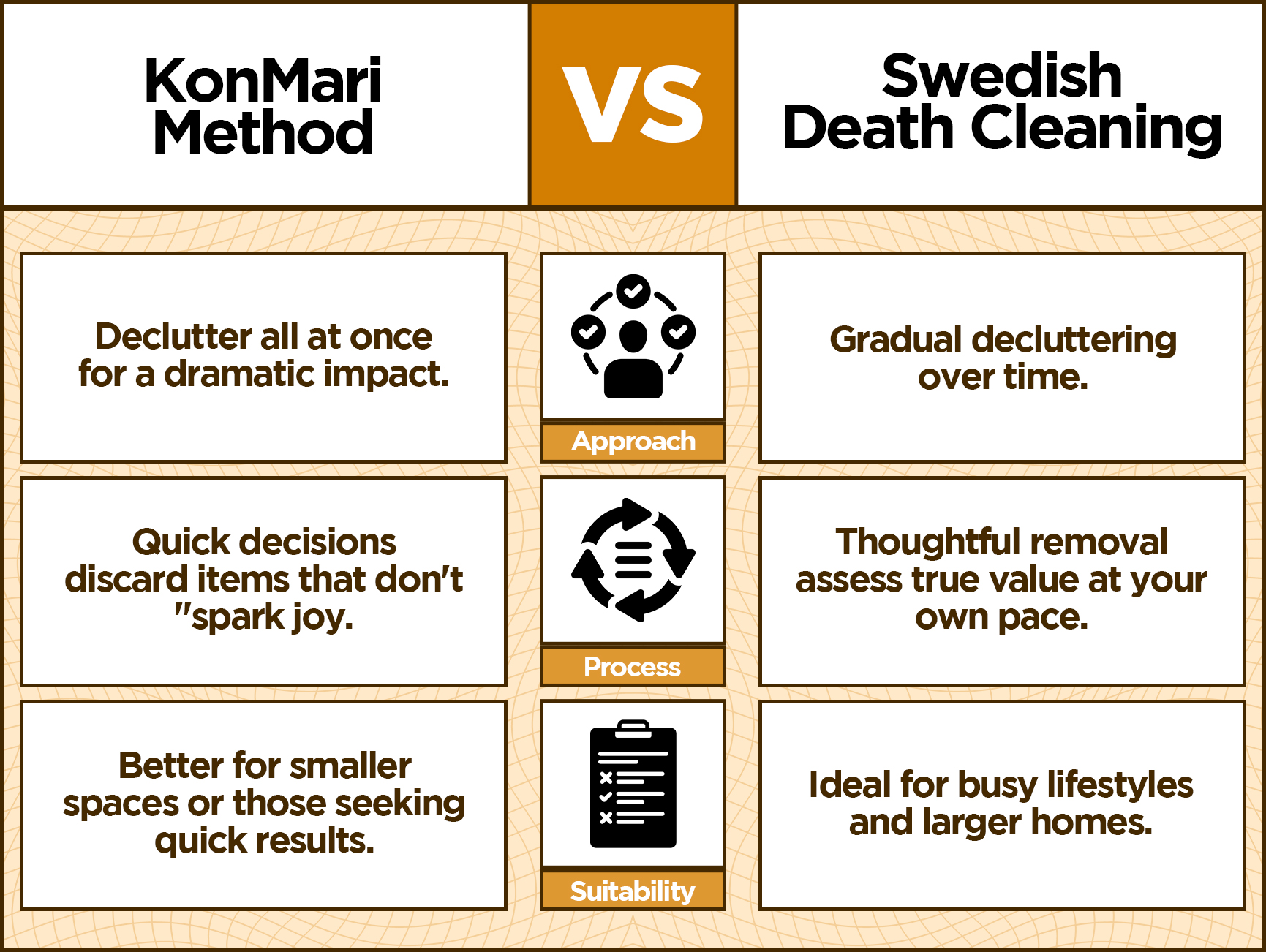
Swedish Death Cleaning is not about tidying your entire home at once; instead, it encourages a slow, methodical removal of items over time. The idea behind it is that as you get older (or as life changes), you begin to let go of unnecessary things—things that may burden your loved ones after you’re gone. It’s not about extreme minimalism, but about removing the things that no longer serve you and ensuring that the things you keep are meaningful and useful.
Here’s why I find Swedish Death Cleaning a better fit for me:
It Lets Me Focus on One Thing At A time
Instead of trying to do everything at once, Swedish Death Cleaning focuses on making small, regular changes over time. This method fits better with my busy life because I can focus on one area at a time, decluttering when I have the time and mental energy to do so.
It Brings Emotional Ease
Unlike KonMari, there’s no pressure to make quick decisions or discard things that I may not be ready to part with. Swedish Death Cleaning encourages you to slowly assess your belongings, giving you time to reflect on their true value. It’s about decluttering thoughtfully, not in a rush.
Decades of Combined Expertise
Best Buy Guidebook is a culmination of online publishing lessons learned. From SEO to paid ads, our team has experienced the highest of highs and the lowest of lows. Our goal now is simple: Arm readers with the most information possible.