
What Is Composite Decking and Is It Right for Your Home?

Youtube
Composite decking has become a go-to for people who want a great-looking deck without the yearly hassle. Instead of sanding and sealing every summer, you get boards that are built to handle the elements—and keep their shape while they do it. That’s the draw: less maintenance, longer life.
But as with most things, there’s more to the story once you dig in. Not all composite boards behave the same in full sun; some run hot underfoot, and the way they’re installed can make a big difference in how they hold up over time.
At its simplest, composite decking combines recycled wood and plastic to create boards that look like wood but don’t warp or rot the way lumber can. That makes it a solid choice for plenty of homes, but it’s not one-size-fits-all. How well it works depends on where it’s used, how it’s installed, and what you expect from it in the long run.
What Is Composite Decking Made Of?
Composite decking is a man-made product, typically crafted from a blend of recycled plastics and wood fibers. This combination creates dense, uniform boards that resemble wood but sidestep many of its weaknesses—splintering, warping, and rot among them.
Capped composite boards, which include an added shell layer, are more resistant to fading and stains than uncapped versions. While both types offer durability, capped options tend to last longer in areas with high sun exposure or heavy foot traffic.
The real appeal lies in the reduced maintenance. Unlike pressure-treated lumber, composite boards don’t require seasonal sealing or staining. They’re built to hold their shape and color for years, provided they’re installed properly and cleaned occasionally.
How Should Composite Decking Be Installed?
Laying composite decking takes a different mindset than working with wood. The material doesn’t respond the same way to temperature changes or fasteners, so a little planning upfront goes a long way.
Jon Peters, a seasoned builder and craftsman, shares a practical tip for layout that helps improve the finished look: “I think it’s best to work from the front of the deck towards the building,” he says. “That way, if you have to make any rips, the rips are near the building and less noticeable than at the front of the deck.”
Small tools make a difference, too. Peters crafted a jig out of quarter-inch plywood to keep the board reveals consistent. “It’s just about the perfect reveal for the decking,” he notes—a simple solution that helps maintain a professional appearance.
Fastening systems matter just as much. Hidden clips offer a clean surface but aren’t always possible around edges or walls. For those spots, Peters recommends capped screws with color-matched heads: “They’re really easy to use and they’re very professional-looking.” The design of these screws even clears out material as they drive in, leaving a neat countersunk finish.
And when it comes to long board runs, don’t skip reinforcement. “For longer runs where two boards meet, you’ll need to sister up your joists,” Peters advises. That provides room for fasteners and adds support at each board’s edge—keeping everything tight and aligned.
How Can You Keep Composite Decking Cooler in Summer?
Composite decking handles moisture well, but it can absorb and retain heat in direct sunlight. On warm days, some boards have been measured at over 140°F—even when the air temperature sits comfortably in the 80s. That can make barefoot afternoons uncomfortable, especially in southern-facing spaces with little shade.
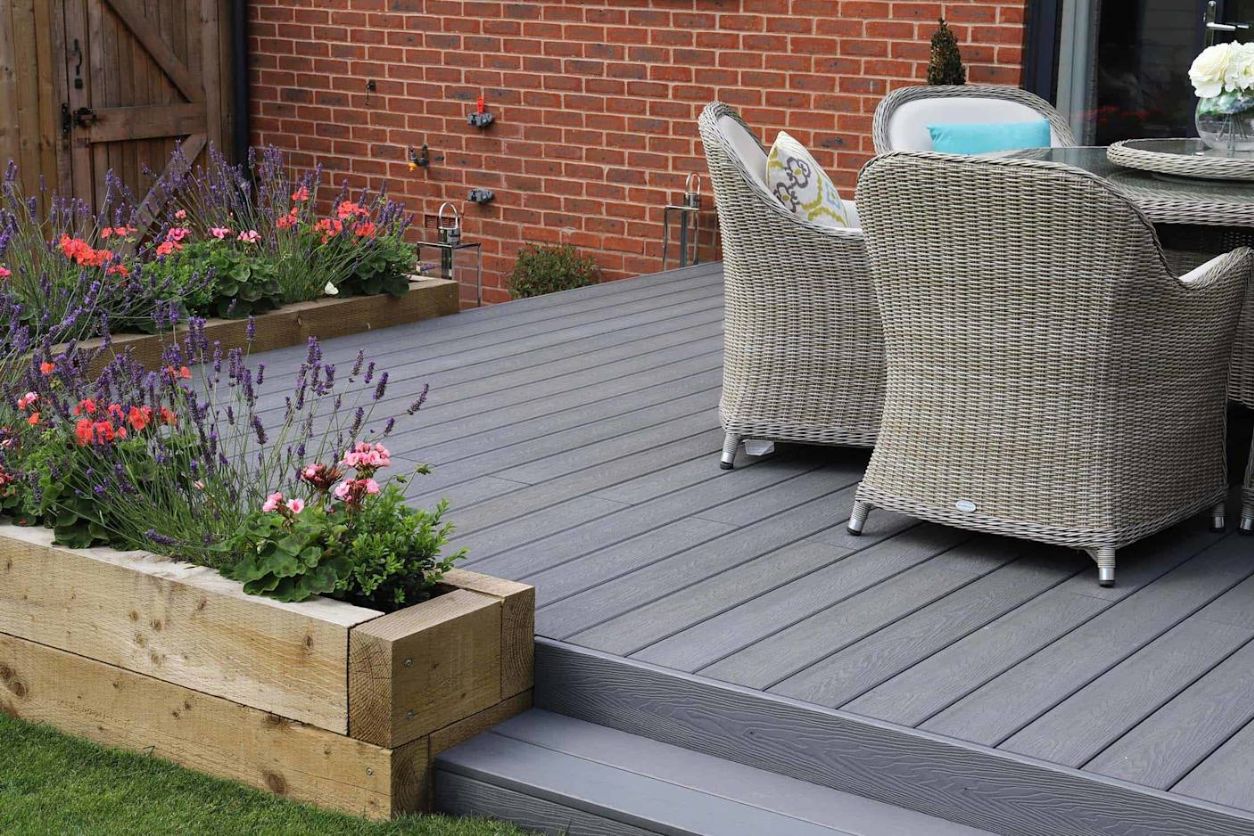
Since composite decking gets significantly hotter in summer, it is important to keep this factor in mind before installing it. Start with color. Just like clothing or roofing, darker shades absorb more heat. If the deck gets full sun for most of the day, a lighter tone, like sandy beige or soft gray, will stay noticeably cooler. Many manufacturers now offer color swatches for outdoor testing, which is worth doing before committing to a full install.
Then there’s layout. Think about where the deck sits in relation to trees, fences, or nearby buildings. Even partial shade during the hottest hours can lower surface temps by several degrees. For wide-open yards, adding a pergola, shade sail, or strategically placed umbrella can help make the space more usable during summer.
Some homeowners also install outdoor rugs over high-traffic areas. While it’s not a fix for the material itself, it gives kids and pets a safe place to walk—or just hang out—without needing shoes.
And finally, airflow matters more than people think. Decks built close to the ground with poor ventilation tend to trap heat, making the surface feel even warmer. Giving the structure room to breathe underneath can make a subtle but noticeable difference.
Where Does Maintenance Fit In?
Despite being labeled “low maintenance,” composite decking still benefits from occasional care. Dirt, pollen, and leaves can build up in the grooves between boards, especially in shaded or damp areas.
A basic rinse with a hose clears most of it, and a mild soap and brush work well for tougher spots. Pressure washing is fine, but only with the right settings—too much force can damage the outer layer of capped boards.
What you won’t need to worry about is sealing, painting, or treating the boards seasonally. That’s one of the major time-savers. Still, composite can scratch or scuff if furniture drags across it, so protective pads or rubber feet on heavy items are smart additions.
Which Styles and Designs Work Best?
Composite boards now come in a wide variety of tones, grain patterns, and finishes. Whether the look is warm and rustic or sleek and modern, there’s likely a board that fits the palette. Some mimic exotic hardwoods; others lean toward minimalist grays and charcoals.
Design features like picture-frame borders, diagonal layouts, and in-deck lighting systems are easier to execute with composite materials. Many systems include matching fascia boards and railing kits, helping create a uniform look from the ground up.
That flexibility makes it a favorite for homeowners who want their outdoor space to feel like a seamless extension of the home, structured, clean, and built with longevity in mind.
Decades of Combined Expertise
Best Buy Guidebook is a culmination of online publishing lessons learned. From SEO to paid ads, our team has experienced the highest of highs and the lowest of lows. Our goal now is simple: Arm readers with the most information possible.