
How to Clean Every Part of the House Like a Pro

Spring is the perfect excuse to give your home a complete reset. After months of closed windows, tracked-in dirt, and a general buildup of dust, it’s time to open things up, let the fresh air in, and tackle every neglected corner. In other words, it’s time to prepare an effective spring cleaning checklist.
If you’ve ever started cleaning only to get sidetracked by a random drawer or an unexpected mess, you know how easy it is to lose momentum. That’s why having a game plan is key and your cleaning checklist just does that. If you follow a structured approach keep things manageable cleaning your space becomes much easier.
This guide takes you through every step of spring cleaning, from the essential supplies to a deep dive into each room. By the time you’re done, your home won’t just look clean—it’ll feel fresh, organized, and truly ready for the season ahead.
Task-by-Task vs. Room-by-Room Approach
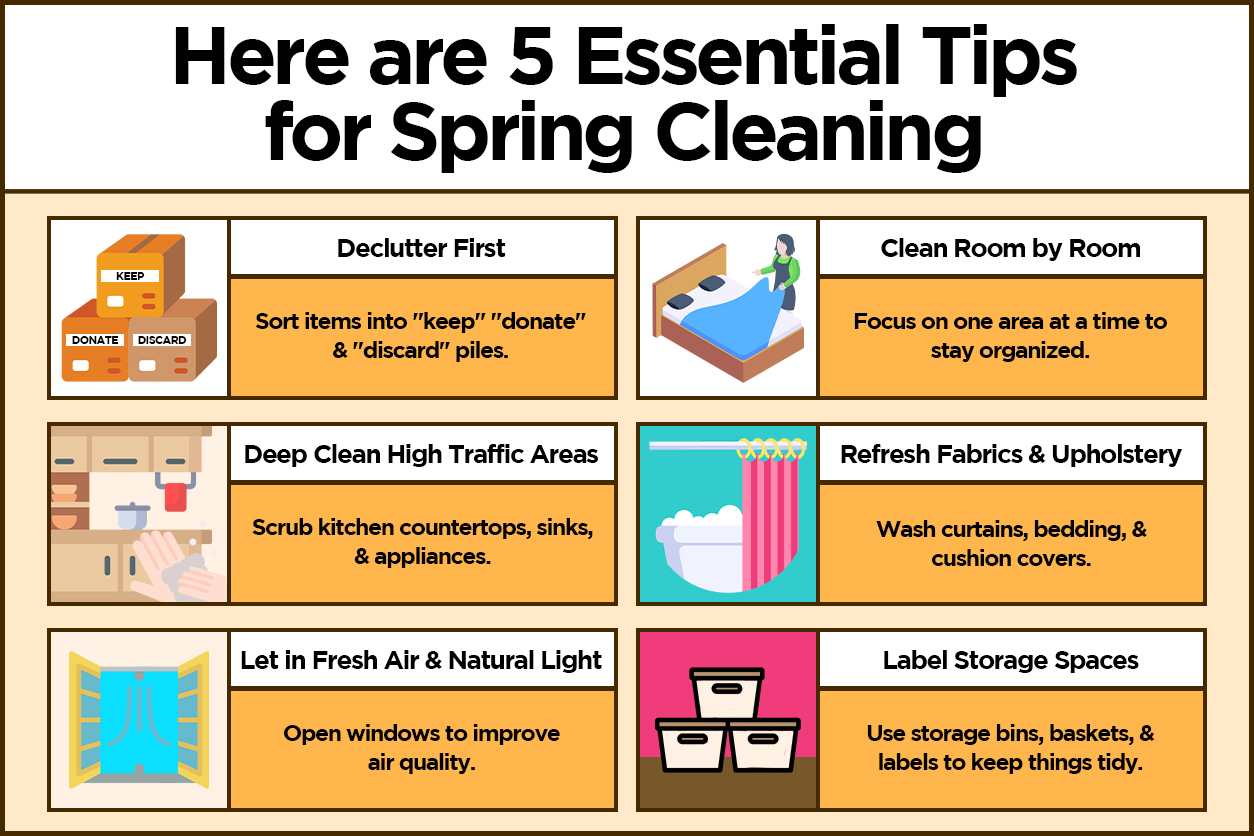
Some people like to focus on one type of cleaning at a time—dusting the entire house one day, and scrubbing baseboards the next. Others prefer tackling one room at a time and getting it completely done before moving on. Both methods work, but which one works for you depends on your cleaning style.
If you thrive on efficiency and don’t mind bouncing between rooms, the task-based approach keeps things moving. On the other hand, if you like the satisfaction of finishing an entire space, go room by room. The key is consistency—whichever method you choose, stick with it until the job is done.
For example, dedicate one evening to the kitchen, another to the bedrooms, and so on. If you’re the type to power through, block out a full day and knock it all out in one go. The best cleaning method is the one that keeps you motivated.
Spring Cleaning Checklist: Essential Tools and Products
You must have the following tools and products to make your spring cleaning effective.
Must-Have Cleaning Tools
The right tools make all the difference. Here’s what you’ll need to tackle every surface:
- A powerful vacuum – Look for one with attachments for upholstery, baseboards, and hard-to-reach spots.
- Microfiber cloths – These trap dust instead of spreading it around and won’t leave streaks.
- A mop and bucket – A spin mop or steam mop is great for deep cleaning floors.
- Scrubbrushes and sponges – Keep a few sizes on hand for everything from sinks to grout lines.
- Extendable duster – Perfect for reaching ceiling fans, vents, and light fixtures.
- Rubber gloves – Protect your hands, especially when working with strong cleaners.
Best Cleaning Products for Different Surfaces
- Multipurpose cleaner – Use on countertops, tables, and bathroom surfaces.
- Glass cleaner – Essential for streak-free windows and mirrors.
- Degreaser – Great for stovetops, range hoods, and kitchen cabinets.
- Disinfectant spray – Use on high-touch areas like light switches, remotes, and door handles.
Natural Cleaning Alternatives
If you prefer to avoid harsh chemicals, these natural solutions get the job done:
- White vinegar – Works as a natural disinfectant and cuts through grease.
- Baking soda – Ideal for scrubbing and deodorizing.
- Lemon juice – Helps remove stains and leaves a fresh scent.
Kitchen Deep Cleaning: A Step-by-Step Guide
Cleaning Countertops, Cabinets, and Appliances
Start by clearing off countertops and wiping them down with a disinfecting spray or a mixture of vinegar and warm water. Pay special attention to cabinet handles and drawers—grease and fingerprints build up fast in a busy kitchen.
Pull out small appliances like the toaster and coffee maker to clean underneath. If your fridge allows, remove shelves and wash them in warm, soapy water. Don’t forget to wipe down the exterior, including the door handles.
Degreasing the Stove and Oven
Stovetops and ovens accumulate more grease than you realize. For burnt-on grime, a paste of baking soda and water works wonders—just let it sit before scrubbing. If you have an oven with a self-cleaning cycle, run it before wiping down the interior.
Descaling the Kettle and Sanitizing the Sink
Limescale buildup in kettles and coffee makers can be removed with equal parts water and vinegar. Let the solution sit before rinsing thoroughly. For the sink, sprinkle baking soda, scrub with a sponge, and finish with a vinegar rinse to keep it sparkling.
Bathroom Deep Cleaning
Best Cleaners for Tile, Grout, and Glass
Mold and mildew love to hide in grout lines, so a mix of baking soda and hydrogen peroxide is a great natural alternative to bleach. For glass shower doors, a solution of dish soap and white vinegar cuts through soap scum without harsh chemicals.
Toilet and Shower Scrubbing Tips
Start with the toilet—scrub inside the bowl with a toilet brush and disinfect the outside, including the flush handle. For showers and tubs, spray a cleaning solution and let it sit before scrubbing. A handheld showerhead makes rinsing easier.
Disinfecting High-Touch Bathroom Surfaces
Toothbrush holders, light switches, and door handles are germ magnets—disinfect them regularly. Keep antibacterial wipes handy for quick touch-ups between deep cleans.
Bedroom Deep Cleaning
Washing Pillows, Bedding, and Mattress Care
Strip the bed completely and wash everything—sheets, pillowcases, even the pillows themselves. Mattresses collect dust mites, so sprinkle baking soda over the surface, let it sit for 30 minutes, then vacuum it up.
Decluttering Your Closet and Wardrobe
Spring is the perfect time to swap out winter clothes for lighter fabrics. Donate anything you haven’t worn in the last year, and use storage bins to keep seasonal items organized.
Dusting High Surfaces and Light Fixtures
Ceiling fans, headboards, and nightstands collect a surprising amount of dust. Use a microfiber cloth or an extendable duster to catch everything, and don’t forget to wipe down lampshades and light switches.
Living Room Deep Cleaning
Upholstery and Carpet Cleaning Tips
Vacuuming alone isn’t always enough for furniture—use a steam cleaner or upholstery cleaner to lift dirt and odors. For carpets, sprinkle baking soda before vacuuming to neutralize smells.
Dusting Shelves, Baseboards, and Electronics
Use a dry microfiber cloth to remove dust from electronics and bookshelves. Compressed air helps clear dust from vents and behind TV screens.
Make Your Living Room Smell Fresh
Diffuse essential oils, place dryer sheets under couch cushions, or boil a pot of water with lemon slices and cinnamon sticks for a subtle, fresh scent.
Hallways and Entryways Deep Cleaning
The moment someone steps into your home, the entryway sets the tone. Whether it’s guests dropping by or just your family coming and going, this high-traffic area collects dirt, dust, and clutter faster than almost any other part of the house. A thorough spring cleaning makes a world of difference—not just for aesthetics, but for keeping allergens and germs at bay.
Cleaning Doors, Handles, and Light Switches
Doors, especially around the handles, accumulate grime quickly, and yet, they’re often overlooked. Take a damp microfiber cloth with a bit of all-purpose cleaner and wipe down the entire surface, paying extra attention to any smudges near the knobs. If your doors have intricate molding, use a toothbrush or small scrub brush to get into the grooves.
Light switches are another hotspot for bacteria and fingerprints. Use a disinfectant wipe or spray a cloth with a mild cleaner (never spray directly onto the switch) and wipe them down.
Organizing Shoes, Coats, and Accessories
A cluttered entryway makes coming and going more stressful than it needs to be. Start by pulling everything out—shoes, coats, scarves, bags—and decide what actually needs to stay.
Invest in a sturdy shoe rack or a storage bench to keep shoes organized and off the floor. If you have multiple family members, assigning a designated basket or cubby for each person makes life easier. Wall hooks or an over-the-door organizer work well for frequently used items like keys, dog leashes, and sunglasses, ensuring they’re always within reach but not in the way.
Sweeping and Mopping the Floors
The entryway floor sees it all—muddy footprints, dust, fallen leaves, and everything else dragged in from outside. Start by shaking out any rugs or mats and giving them a good vacuum. If they’re machine washable, toss them in for a fresh start.
Sweep or vacuum the entire area, making sure to reach into the corners where dust tends to settle. A good mopping session with warm water and a floor-appropriate cleaner will not only make the space look cleaner but also remove any unseen bacteria. If you have tile or grout, consider using a steam mop or a scrub brush for a deeper clean.
Outdoor Deep Cleaning
Spring cleaning shouldn’t stop at the front door—your outdoor spaces deserve attention too. A well-maintained patio, clean windows, and clear gutters not only make your home look better but also prevent long-term damage and costly repairs.
Cleaning Exterior Windows and Screens
Over time, windows collect dust, pollen, and water spots that dull their shine. Mix a solution of equal parts white vinegar and water in a spray bottle and use a microfiber cloth or squeegee to wipe them clean. If the grime is particularly stubborn, add a drop of dish soap to break down the buildup.
For window screens, remove them if possible and rinse them with a garden hose. If they’re too delicate to remove, use a soft brush attachment on your vacuum to clear out dust and debris. This small step makes a big impact on how much light filters into your home.
Power Washing Driveways and Patios
Moss, mildew, and dirt accumulate on concrete surfaces over time, leaving driveways and patios looking dingy. A pressure washer is the quickest way to blast away grime, but if you don’t have one, a stiff-bristle broom and a bucket of warm soapy water can do the trick. Pay special attention to cracks where dirt loves to settle, and if you notice weeds growing between patio pavers, pull them out before they take over.
Checking and Cleaning Gutters
Gutters play a crucial role in directing rainwater away from your home, but they can’t do their job if they’re clogged with leaves and debris. Spring is the perfect time to inspect and clean them before heavy rains hit. Use a ladder to carefully check for blockages and scoop out any buildup with a gloved hand or a small garden trowel.
After clearing out the debris, flush the gutters with a hose to make sure water flows freely. While you’re up there, inspect for any cracks or loose fasteners—small issues now can turn into bigger, more expensive problems later.
Refreshing Outdoor Furniture and Garden Tools
Patio furniture and garden tools often sit unused during winter, collecting dust and sometimes even rust. Wipe down chairs, tables, and loungers with soapy water and a soft cloth, and check cushions for any signs of mildew. If they’re machine washable, toss them in the laundry for a fresh start.
Garden tools also need a little TLC before the growing season begins. Wipe off any dirt, sharpen blades if needed, and oil any rust-prone parts to keep them in top condition.
Decades of Combined Expertise
Best Buy Guidebook is a culmination of online publishing lessons learned. From SEO to paid ads, our team has experienced the highest of highs and the lowest of lows. Our goal now is simple: Arm readers with the most information possible.