
How Do Air Plants Work? Here’s What the Experts Say

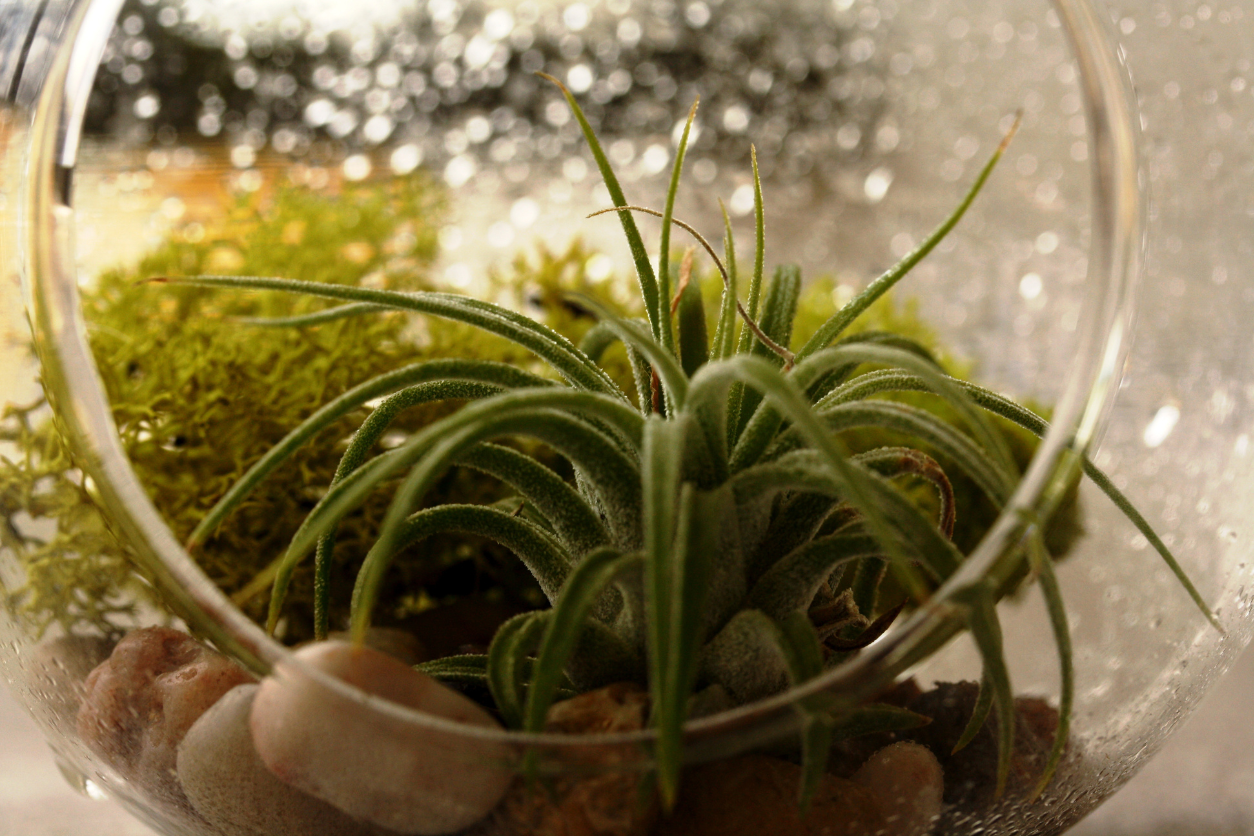
Air plants, or Tillandsia, have become quite the trend in recent years, and it’s easy to see why. I mean who wouldn’t be fascinated by a plant that survives without any soil and not only survives but also grows and thrives? These plants manage to pull off a botanical trick that most others can’t—growing happily with just a little light, water, and air. Read below to find out how they work.
So, How Do Air Plants Work?
Air plants belong to the Tillandsia genus, a member of the Bromeliad family—yes, the same family that brought us pineapples. Over 600 different species of Tillandsia exist, each one with its own quirky charm. Some are small enough to fit in your hand, while others are as big as a dinner plate (okay, maybe a little smaller).
What really makes them stand out, though, is their total disregard for soil. Instead of snuggling up to the earth, they’re out here growing on other plants, rocks, or even the sides of buildings. Josh Rosen, a landscape architect and horticulturist, explains that these plants “use their roots just to hang on to the trees.” Their roots function as “holdfasts” rather than traditional nutrient pathways.
So, if you’re wondering, “If they don’t rely on soil and if they don’t have any roots, where do they take their nutrients from?”—the secret lies in their leaves. These leaves are covered with tiny structures called trichomes, which are essentially the plant’s version of little sponges, soaking up moisture and nutrients directly from the air.
As Pamela Koide Hayat, a horticulturist and Tillandsia expert, highlights, trichomes “act like little sponges to absorb the moisture and bring it down into the leaf surface.” They’re not just functional but also protective since they reflect sunlight and prevent moisture loss.
Air plants aren’t just fascinating because they thrive without soil; they also have a unique way of adapting to their environment, which makes them truly stand out. “They sort of remind me of people in modern society,” Pamela shares. This idea comes from their ability to thrive in almost any environment, much like how we create our own unique habitats in homes, offices, and other spaces.
How Air Plants Survive in Different Environments
One of the things that make air plants so fascinating is their versatility. Native to regions across the Americas, from the southern United States to parts of Central and South America, air plants are found in some pretty diverse environments. And despite their delicate appearance, they are incredibly resilient.
In cloud forests, where humidity is high and fog lingers in the air, air plants get the moisture they need simply by absorbing water vapor. In the wild, they often grow in the upper canopy of trees, catching the mist and rain that comes with the territory. These plants don’t need to be constantly soaked in water. Instead, they rely on the moisture that’s already in the air around them.
Air plants can also survive in the harsh conditions of deserts. While rain is scarce, morning fog or the occasional light rain is enough to sustain them.
Air Plants’ Unique Photosynthesis Process
Air plants use a special form of photosynthesis called CAM (Crassulacean Acid Metabolism) photosynthesis. This is a process that allows plants to take in carbon dioxide during the cooler evening hours, storing it for use in the daytime when it’s warmer and water loss is greater.
CAM is less efficient in terms of energy production than the typical photosynthesis process used by most plants. But it is incredibly effective at conserving water. This is a crucial adaptation for air plants, as it allows them to survive in environments with limited water availability. The trade-off is that the growth rate of air plants may be slower compared to other plants. However, their ability to conserve water allows them to thrive in environments that would otherwise be inhospitable.
Air Plant Care: Misconceptions and Tips
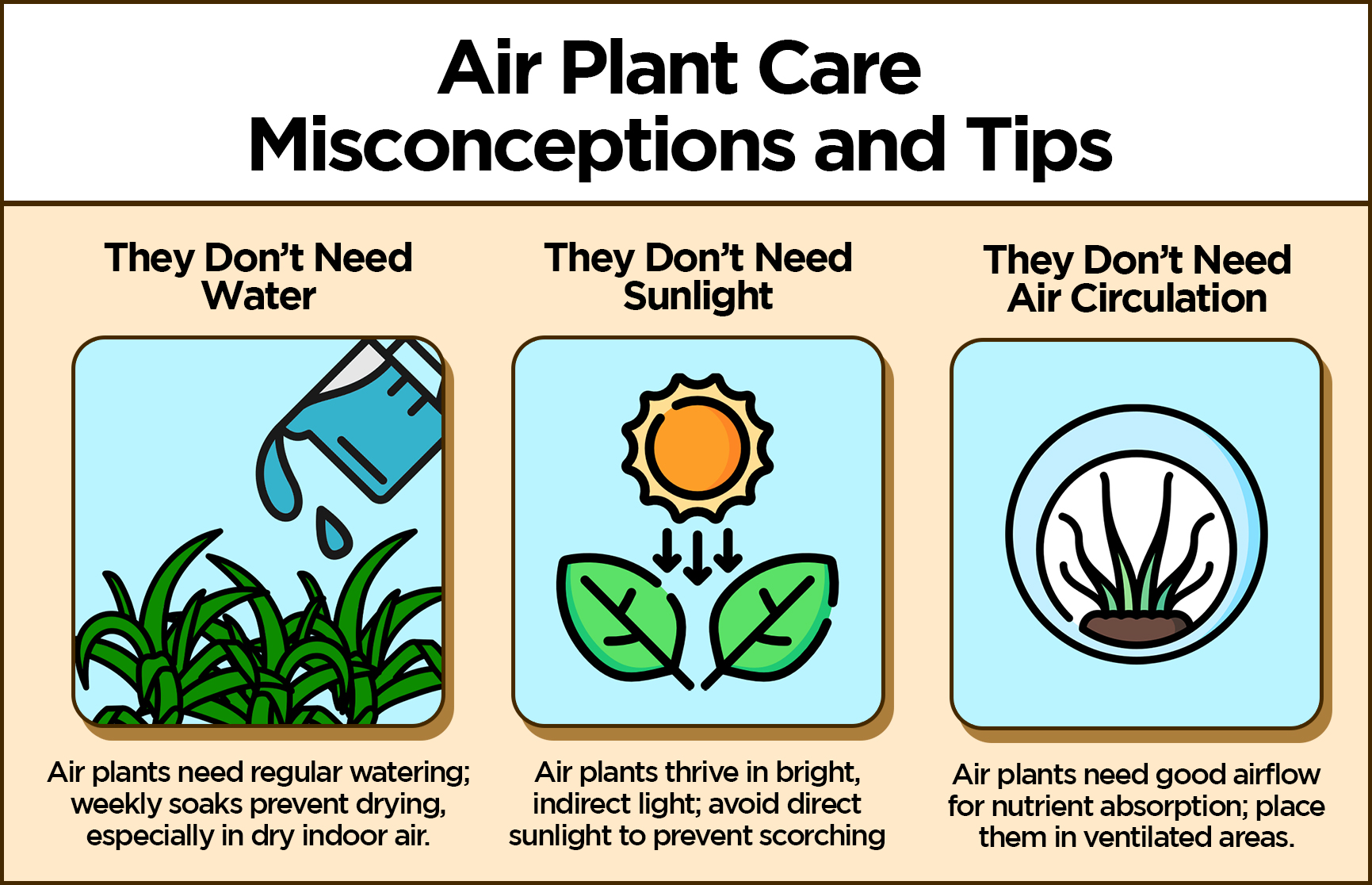
While air plants are often touted as being low-maintenance, they still require proper care to thrive. Here are some common misconceptions about air plants and expert tips for ensuring they stay healthy.
1. They Don’t Need Water
One of the most common misconceptions about air plants is that they don’t need water. While it’s true that they don’t require soil, air plants still need to be watered regularly. In indoor environments, where air tends to be dry, air plants can quickly dry out. This particularly happens with air conditioning or heating. As Josh recommends a “weekly submerging soak for several hours.”
2. They Don’t Need Sunlight
Another misconception is that air plants don’t need sunlight. While they don’t need direct sunlight like some other plants, air plants do require bright, indirect light to thrive. A location near a window that receives filtered light is ideal. Too much direct sunlight can scorch the leaves, while too little light can cause the plant to become weak.
3. They Don’t Need Air Circulation
Air circulation is essential for air plants. In the wild, air plants grow in open, breezy environments where the movement of air helps bring nutrients and moisture to the plant. In an indoor setting, air circulation helps the trichomes on the leaves to absorb nutrients. Make sure to place your air plants in a spot with good airflow, away from stagnant areas.
Decades of Combined Expertise
Best Buy Guidebook is a culmination of online publishing lessons learned. From SEO to paid ads, our team has experienced the highest of highs and the lowest of lows. Our goal now is simple: Arm readers with the most information possible.