
Easy Hack to Remove Hard Water Stains From Any Surface

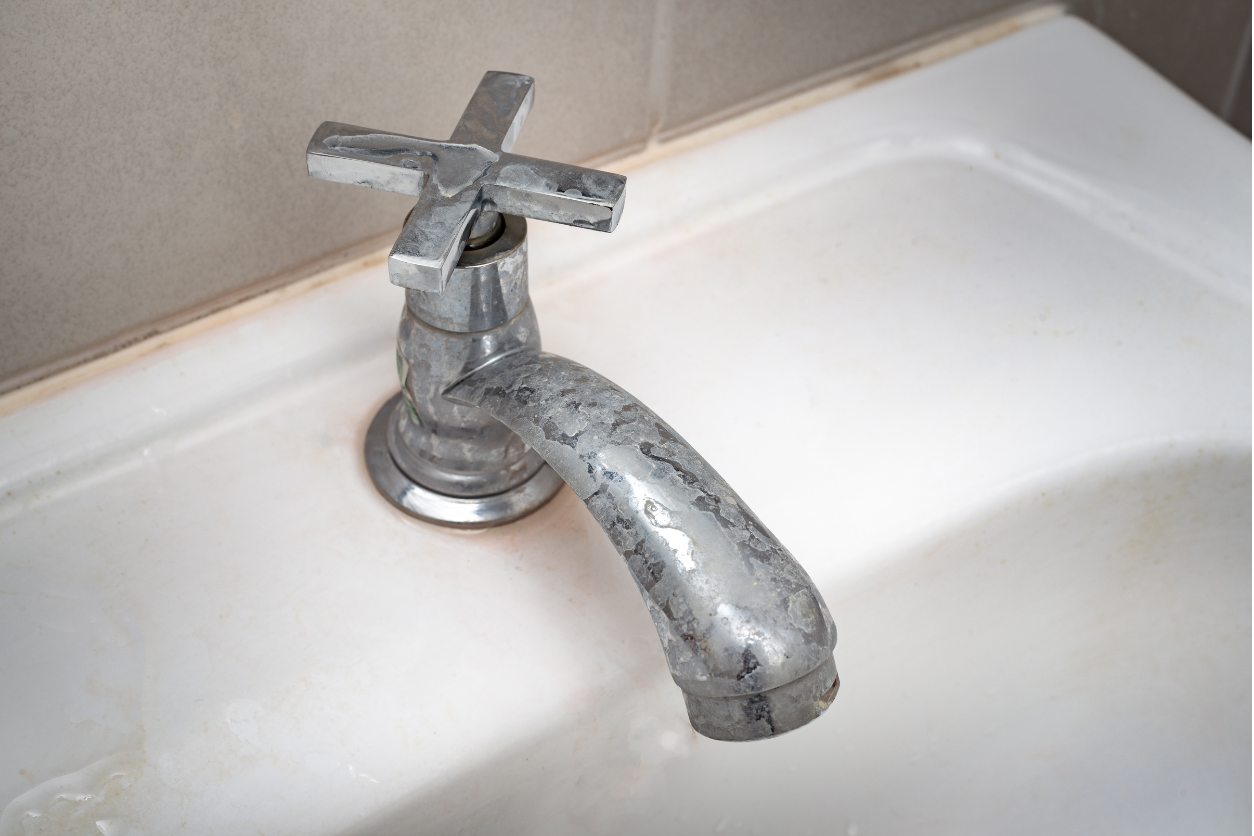
How do you remove hard water stains? It’s a mystery even #cleantok can’t get right— and yet you’ll find them in every household that has had the misfortune of dealing with mineral-rich water. Often found clinging stubbornly to glass shower screens, tiles, faucets, and even inside your washing machine and dishwasher, these stubborn marks are caused by the mineral deposits left behind when hard water evaporates.
Why Hard Water Stains Happen (And Why You Shouldn’t Ignore Them)
Hard water stains are the result of mineral deposits left behind when water evaporates. In areas with high mineral content, particularly calcium and magnesium, these deposits accumulate quickly on surfaces exposed to water. Shower screens, faucets, and glass windows are prime targets because they’re frequently wet and often overlooked during routine cleaning. Over time, these stains can etch into surfaces like glass shower doors, making them even harder to remove and leaving a dull, unsightly finish.
Mineral buildup doesn’t just look bad; it can also lead to functionality issues. For instance, fixtures might lose their shine, showerheads can become clogged, and appliances like dishwashers and washing machines can suffer from reduced efficiency due to internal scaling. Tackling hard water stains promptly not only restores the aesthetic of your surfaces but also prevents costly repairs or replacements.
How to Remove Hard Water Stains
Materials You’ll Need
Cleaning hard water stains doesn’t require fancy tools or expensive products. Some of the best solutions are likely already in your home. Here’s what you’ll need:
- Distilled white vinegar or cleaning vinegar (5-6% acetic acid)
- Baking soda
- Bar Keepers Friend, CLR, Lime Away, or Bio Clean
- Non-scratch sponges (like Scrub Daddy)
- Microfiber cloths
- Grade 0000 steel wool
- Rubber gloves
- A spray bottle
- Water-repellent product, such as Rain-X
Step 1: Start with Vinegar for Light Buildup
Vinegar is a go-to solution for dealing with hard water stains. Its natural acidity helps break down mineral deposits without damaging surfaces. Mix equal parts distilled white vinegar and distilled water in a spray bottle. Spray the solution generously on the affected area and let it sit for 2-3 minutes—this dwell time allows the vinegar to penetrate and loosen the deposits.
After the dwell time, use a non-scratch sponge to scrub the surface gently. Focus on areas with visible buildup, and rinse thoroughly with clean water. Finish by drying the surface with a microfiber cloth to avoid streaks.
Step 2. Baking Soda for Stubborn Stains
For stains that refuse to budge, baking soda offers extra scrubbing power. Create a paste by mixing baking soda with a small amount of water. Apply the paste directly to the stains and let it sit for a few minutes. Then, use a damp sponge to scrub the area in circular motions. Rinse thoroughly with water and dry the surface with a microfiber cloth.
Step 3. Steel Wool for Tough Cases
When dealing with heavy buildup on glass or chrome, steel wool (Grade 0000) can be a game-changer. It’s fine enough to avoid scratching but strong enough to tackle stubborn stains. Wet the surface and gently scrub using the steel wool. Keep the area lubricated with water or vinegar to minimize friction and prevent scratches. Once the stains are gone, rinse and dry the area thoroughly.
Removing Hard Water Stains from Chrome Fixtures
Chrome fixtures like faucets and showerheads are just as susceptible to hard water stains. To clean them, soak a microfiber cloth in vinegar and wrap it around the fixture. Let it sit for about 30 minutes, then scrub with a non-scratch sponge or steel wool for tougher spots. Rinse and buff dry for a streak-free shine.
How to Prevent Hard Water Stains
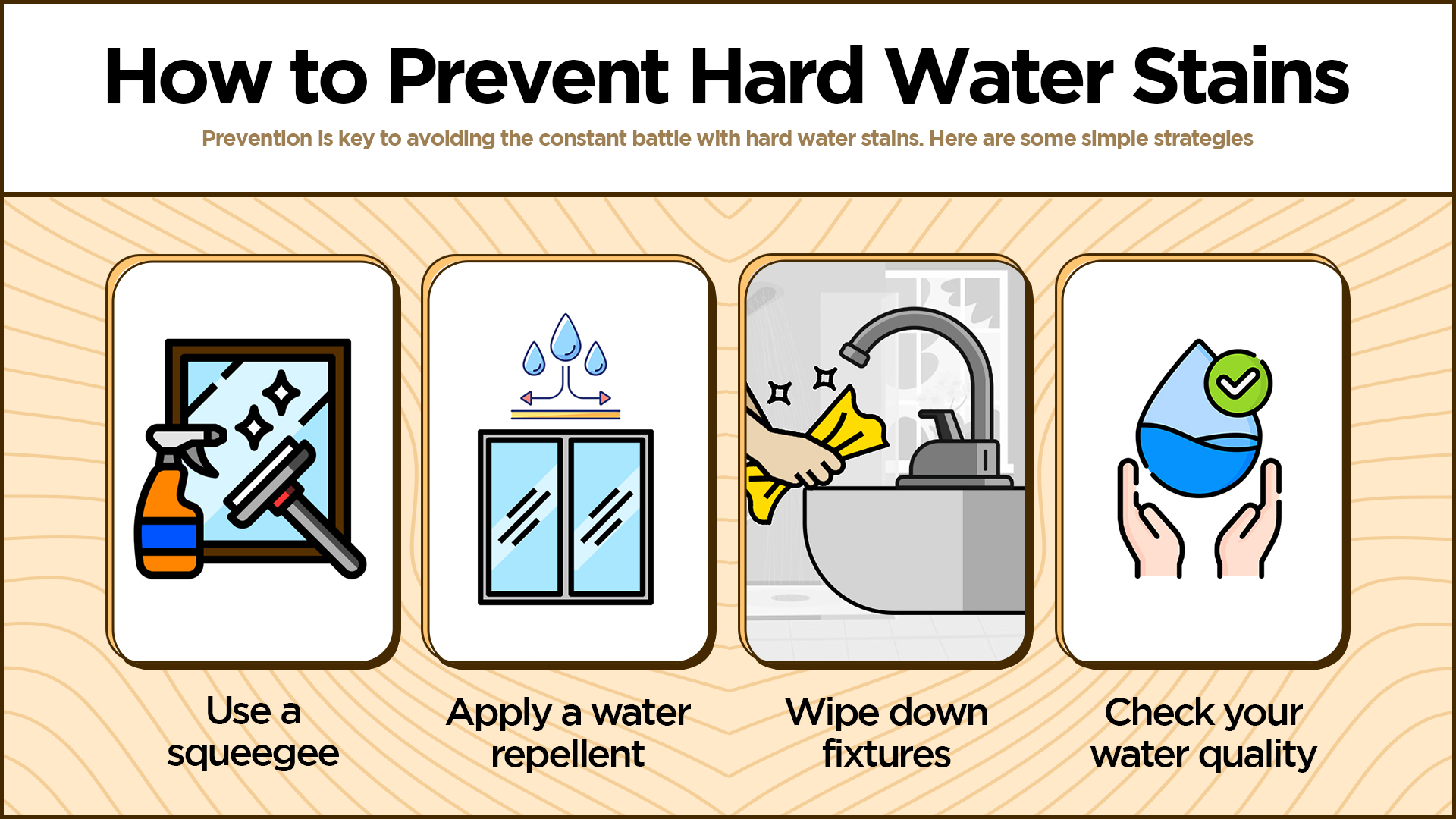
Prevention is key to avoiding the constant battle with hard water stains. Here are some simple strategies:
- Use a squeegee: After each shower, squeegee the water off glass surfaces to prevent mineral deposits from forming.
- Apply a water repellent: Products like Rain-X create a barrier on glass that repels water, making it harder for stains to stick. Apply it according to the manufacturer’s instructions and buff with a microfiber cloth.
- Wipe down fixtures: Regularly drying faucets and showerheads after use prevents buildup.
- Check your water quality: If hard water is a persistent issue, consider investing in a water softener to reduce mineral content at the source.
FAQsHow Often Should You Remove Hard Water Stains?It depends on your water quality and how often the surfaces are used. In areas with hard water, weekly maintenance is ideal to prevent buildup. Regular cleaning reduces the need for heavy scrubbing and helps surfaces stay pristine longer. Why Does Buildup Occur?Buildup happens because hard water is rich in minerals like calcium and magnesium. When water evaporates, these minerals remain behind. The higher the mineral concentration in your water, the faster and more stubborn the buildup. How Can I Prevent Hard Water Stains?The easiest way to prevent stains is to dry surfaces after each use. Use a squeegee on glass shower doors and a microfiber cloth on fixtures. Applying a water-repellent product like Rain-X can also minimize buildup by preventing water from sticking to surfaces. Are DIY Solutions Safe?Yes, DIY solutions using vinegar, baking soda, and dish soap are safe for most surfaces. However, always test a small, inconspicuous area first to ensure compatibility. What’s the Best Store-Bought Cleaner to Remove Hard Water Stains?If DIY methods don’t work, consider products like Bar Keeper’s Friend or CLR. Both are effective but should be used with caution on delicate surfaces. Products like Bar Keeper’s Friend use citric acid to tackle stains, which I’ve found to be more efficient for tougher spots. . |
Decades of Combined Expertise
Best Buy Guidebook is a culmination of online publishing lessons learned. From SEO to paid ads, our team has experienced the highest of highs and the lowest of lows. Our goal now is simple: Arm readers with the most information possible.