
Why I Refuse to Jump on the Decluttering Bandwagon

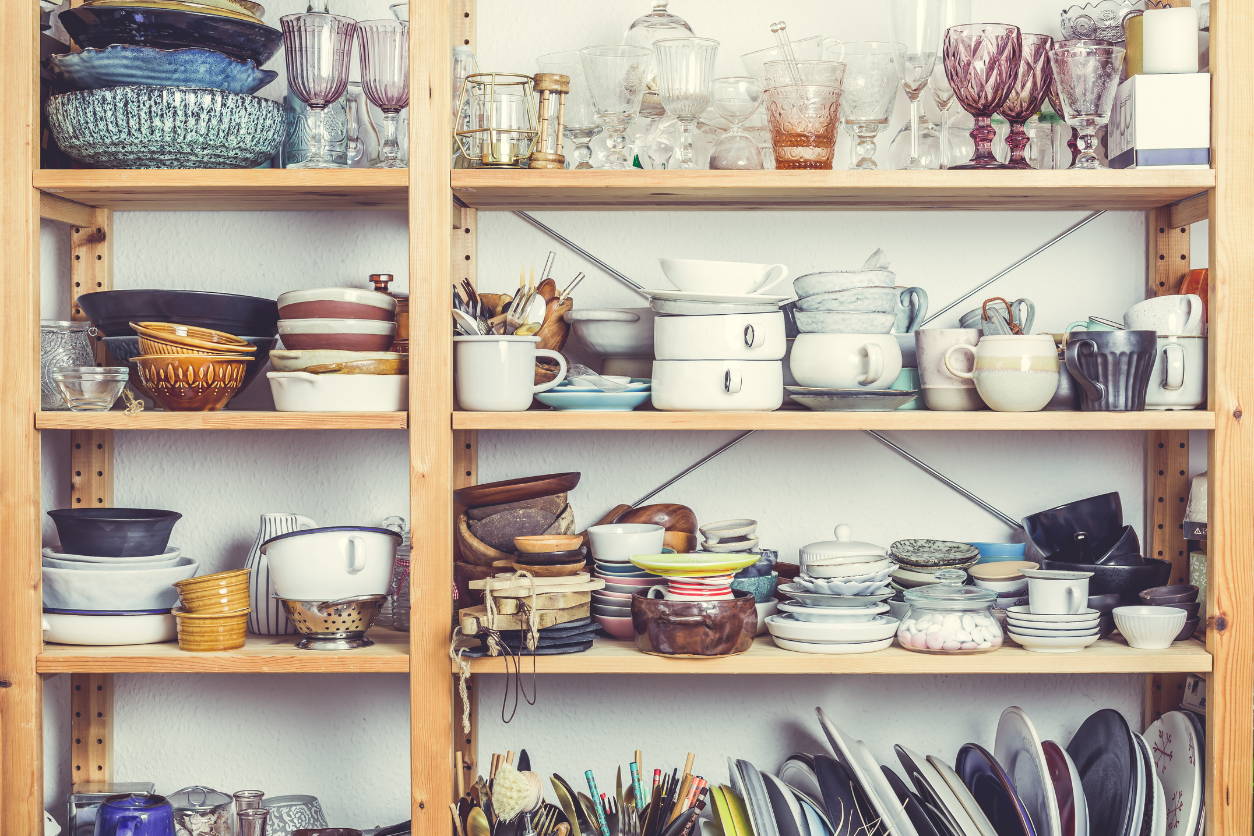
Like many others, I, too, once fell victim to the shiny new idea of minimalism. It was hard not to feel the pressure and guilt that came from social media networks flooded with pristine, clutter-free homes and influencers swearing by the power of decluttering. I convinced myself that a perfect home—a space with only the essentials—would lead to peace, happiness, and a sense of fulfillment. But after giving it my best shot, I realized that the path to minimalism wasn’t as peaceful as it seemed. In fact, it left me feeling more stressed and disconnected than ever. Here’s why I refuse to jump on the decluttering bandwagon anymore.
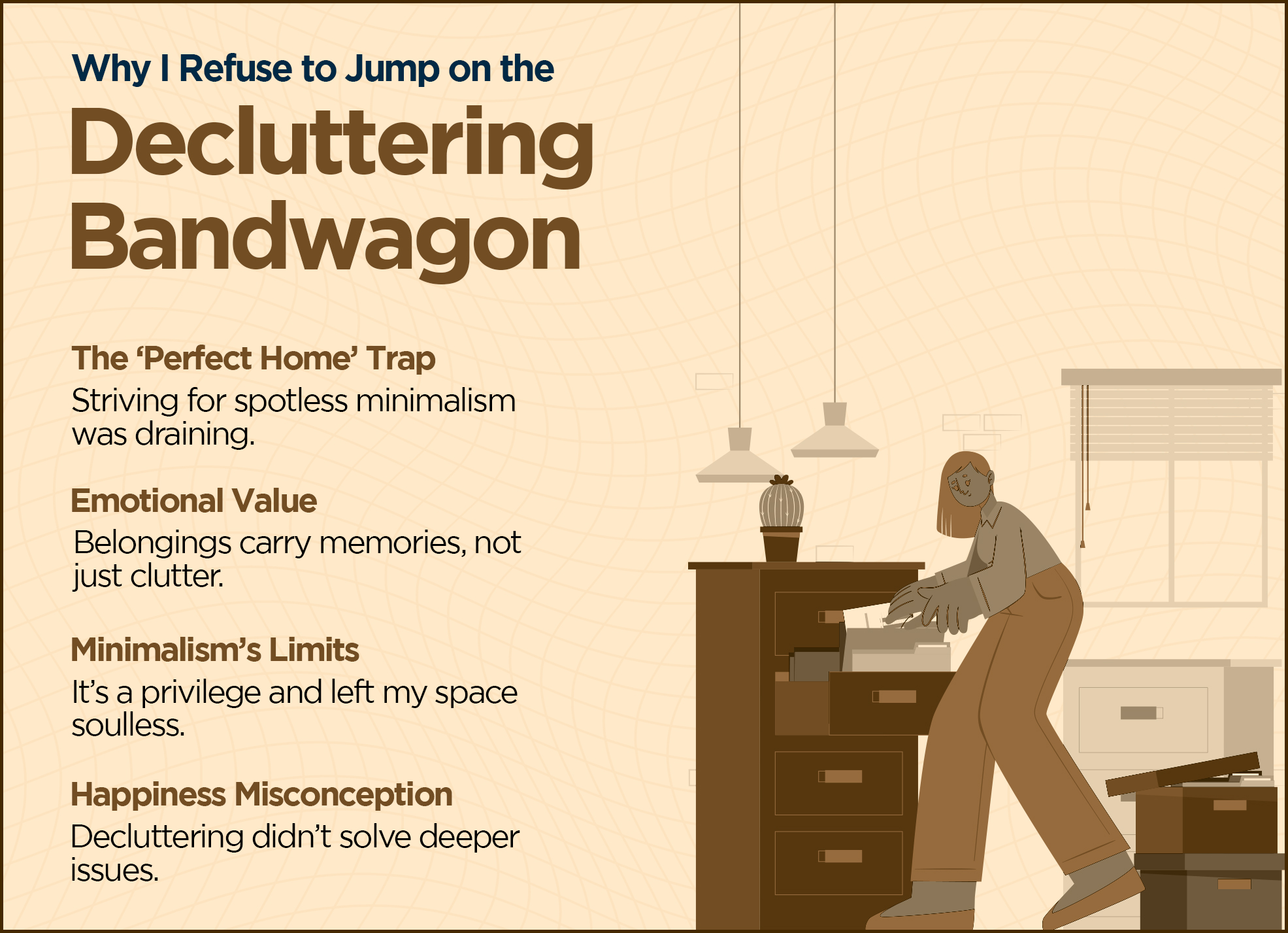
A ‘Perfect Home’ is a Trap
I remember the first time I tried to embrace minimalism. I scrolled through countless Pinterest boards filled with white walls, sleek furniture, and perfectly organized shelves. The idea of a ‘perfect home’ was so tempting—everything in its place, no mess, no distractions. It seemed like just the thing you’d need for calm and tranquility. I thought, “If I can just get rid of the clutter, everything will fall into place.” I dove headfirst into decluttering, getting rid of items I thought I no longer needed, hoping to create a peaceful and organized space.
But after a while, striving for perfection was draining. The constant need to maintain a spotless home added pressure and stress to my life. Every corner had to be tidy, every item in its place, and every surface cleared. The pursuit of this so-called ‘perfect home’ became a trap. Instead of feeling peaceful, I felt exhausted, constantly worrying about the state of my space. What I had once seen as a goal was now an overwhelming burden. I found myself caught in a never-ending cycle of cleaning and organizing, always striving for an ideal that I couldn’t truly enjoy.
Trying to Let Go Became an Obsession
As I continued on my decluttering journey, I found myself slipping into the habit of compulsively letting go of things. I started with small areas—old clothes, random knick-knacks—and gradually moved to bigger items. At first, it felt liberating. My home seemed fresher, more open, and less cluttered. But soon, I began questioning every single possession. Was this item really necessary? Did I need that picture frame or that extra set of dishes?
Before I knew it, decluttering had turned into an obsession. Every day, I was tossing things out, thinking it would make my life simpler and my space more peaceful. But the more I let go, the emptier I felt. It became harder to differentiate between what I truly wanted to keep and what I had been told I should get rid of. It wasn’t long before I realized I wasn’t letting go of just “stuff”—I was letting go of memories, emotions, and parts of my identity.
My Stuff Is More Than Just ‘Clutter’
One of the hardest parts of decluttering for me was coming to terms with the emotional value of my belongings. Each item in my home had a story behind it. A book from a friend, a souvenir from a trip, or a family heirloom—these things weren’t just ‘clutter’ to me. They were fragments of my life that were filled with memories and meaning.
As I followed the minimalist advice to get rid of anything that didn’t “spark joy,” I found myself questioning my connection to these items. But how could I part with the things that held such deep sentimental value? My belongings weren’t just physical objects—they were part of my story. Letting go of them meant I was losing pieces of my past.
Decluttering Is Often a Luxury, Not a Choice
Decluttering isn’t something everyone has the luxury to do. The minimalist movement often overlooks the fact that for many people, reducing possessions isn’t a lifestyle choice—it’s a privilege.
I came across many minimalist advocates encouraging people to buy less, but better quality—fewer items that last longer, create less waste, and bring more value. However, this way of thinking assumes that everyone can afford to make those decisions. Buying fewer, more expensive items is a privilege in itself. For example, a pair of high-quality shoes might last longer and feel better, but they cost far more than a pack of cheaper alternatives. Not everyone has the financial freedom to invest in quality items when cheaper options are all that they can afford.
Minimalism Took the Soul Out of My Space
I noticed one more thing—my home started to feel… well, soulless. It was tidy, organized, and stripped down to only the essentials, but it lacked warmth. The little trinkets that had accumulated over the years, the photos that reminded me of special moments, the little messes that made my space feel lived in–all of them were gone. What was left was a perfectly curated but lifeless shell.
This made me understand that clutter doesn’t always mean chaos. It can also mean personality, comfort, and life. My belongings were part of the atmosphere that made my home uniquely mine. When I removed these pieces in the name of minimalism, I felt like I had taken away the heart of my space. It no longer reflected me—it was just a clean, empty canvas. In trying to create a home that looked like something out of a design magazine, I had lost the warmth and character that made it feel like home.
Getting Rid of Stuff Won’t Make Me Happier
Through all of this, one key lesson was that getting rid of stuff won’t magically make me happier. In the beginning, I believed that by simplifying my space, I would feel more peaceful and content. But the truth is, minimalism didn’t bring the happiness I had hoped for. I had reduced my material possessions, but I hadn’t addressed the deeper emotional and psychological needs that were at the root of my dissatisfaction.
Minimalism was a band-aid solution of sorts, a coping mechanism I used. Now, I’ve chosen to embrace my belongings for what they are: pieces of my story. They’re not just clutter, and they don’t need to be minimized for the sake of a trend. My space, even with its mess, reflects who I am, and I’m learning to love it that way. Decluttering may work for some, but for me, it was a journey to self-realization. I’ve learned that a perfect home isn’t a place devoid of stuff—it’s a space that feels authentic, lived-in, and full of life. And for that, I wouldn’t trade a single item.
Decades of Combined Expertise
Best Buy Guidebook is a culmination of online publishing lessons learned. From SEO to paid ads, our team has experienced the highest of highs and the lowest of lows. Our goal now is simple: Arm readers with the most information possible.